

The federal bankruptcy code doesn't limit the total number of times you can seek relief, but it strictly dictates the precise intervals at which you're eligible for a legal discharge. Many individuals in Cook County mistakenly assume a previous filing permanently closes the door to protection, even as they face active wage garnishments or the immediate threat of foreclosure. Determining how often can you file bankruptcy requires more than a casual glance at the calendar; it demands a strategic analysis of your prior filing and discharge dates to ensure your next petition achieves its intended goal.
It's natural to feel concerned about eligibility when financial pressures resurface, particularly when legal nuances create confusion regarding your standing. You're looking for a definitive roadmap to stop creditor actions and restore your financial equilibrium in Northbrook. This article clarifies the mandatory waiting periods for Illinois residents and outlines how to time your filing for maximum debt relief. We'll explore the specific 2, 4, 6, and 8 year statutory requirements that govern your path toward a sustainable financial future and permanent debt resolution.
Key Takeaways
- Distinguish between the procedural right to file a petition and the substantive eligibility for a debt discharge to ensure your legal strategy is grounded in precision.
- Identify the precise statutory timelines, including the 8-year and 2-year rules, to determine exactly how often can you file bankruptcy and secure a fresh start.
- Discover how the "Automatic Stay" can be strategically utilized to halt Cook County sheriff sales, even in cases where a discharge is not the immediate objective.
- Leverage localized expertise within the Northern District of Illinois to apply specific exemptions that protect your assets and maximize your financial recovery.
Understanding the Frequency of Bankruptcy Filings in Illinois
The question of how often can you file bankruptcy requires a nuanced understanding of federal statutes and local court procedures. While the U.S. Bankruptcy Code doesn't technically limit the total number of times an individual can submit a petition, it strictly regulates the frequency with which a debtor can receive a discharge of their liabilities. This regulatory framework was significantly tightened by the Bankruptcy Abuse Prevention and Consumer Protection Act (BAPCPA) of 2005. This legislation introduced specific time intervals between filings to prevent perceived system abuse and ensure that the process remains a tool for genuine recovery rather than a recurring escape from financial obligations.
For all legal calculations, the clock begins on the date the previous case was filed. It doesn't matter when the case was closed or when the discharge order was signed. If you filed a Chapter 7 case on January 1, 2016, your eligibility for a subsequent Chapter 7 discharge is measured from that specific 2016 date. Local residents in Northbrook often lose track of exact dates from cases filed a decade ago. Precision is mandatory here. The U.S. Bankruptcy Court for the Northern District of Illinois maintains digital records accessible via the PACER system. Using these records is the only reliable way to confirm your "filing date," which serves as the anchor for all future eligibility.
The Difference Between Filing and Receiving a Discharge
A discharge represents the legal elimination of your personal liability for specific debts. It's the primary goal of most filings. You might technically be allowed to file a petition "too soon," but doing so results in a case where no debt is actually wiped away. This strategy is occasionally used to gain the protection of the automatic stay, yet it carries significant risks. Filing without eligibility can waste your filing fee and potentially limit your legal rights in future cases.
Why Illinois Residents Might Need to File Multiple Times
Economic volatility in the Chicago area frequently necessitates a safety net. Medical expenses account for approximately 66.5 percent of all bankruptcies in the United States, and Illinois residents aren't immune to these pressures. Fridman Legal approaches these cases by analyzing the client's previous filing history to ensure a state of strategic readiness. We focus on the intersection of legal timing and financial necessity to ensure that when you ask how often can you file bankruptcy, the answer aligns with your long-term stability.
Understanding these timelines is the first step in a successful financial restructuring. The complexity of the 2005 BAPCPA rules means that a single day's difference in filing can be the difference between total debt relief and a dismissed case. Our firm provides the precise analysis required to navigate these federal mandates with confidence.
The Mandatory Waiting Periods: Chapter 7 and Chapter 13
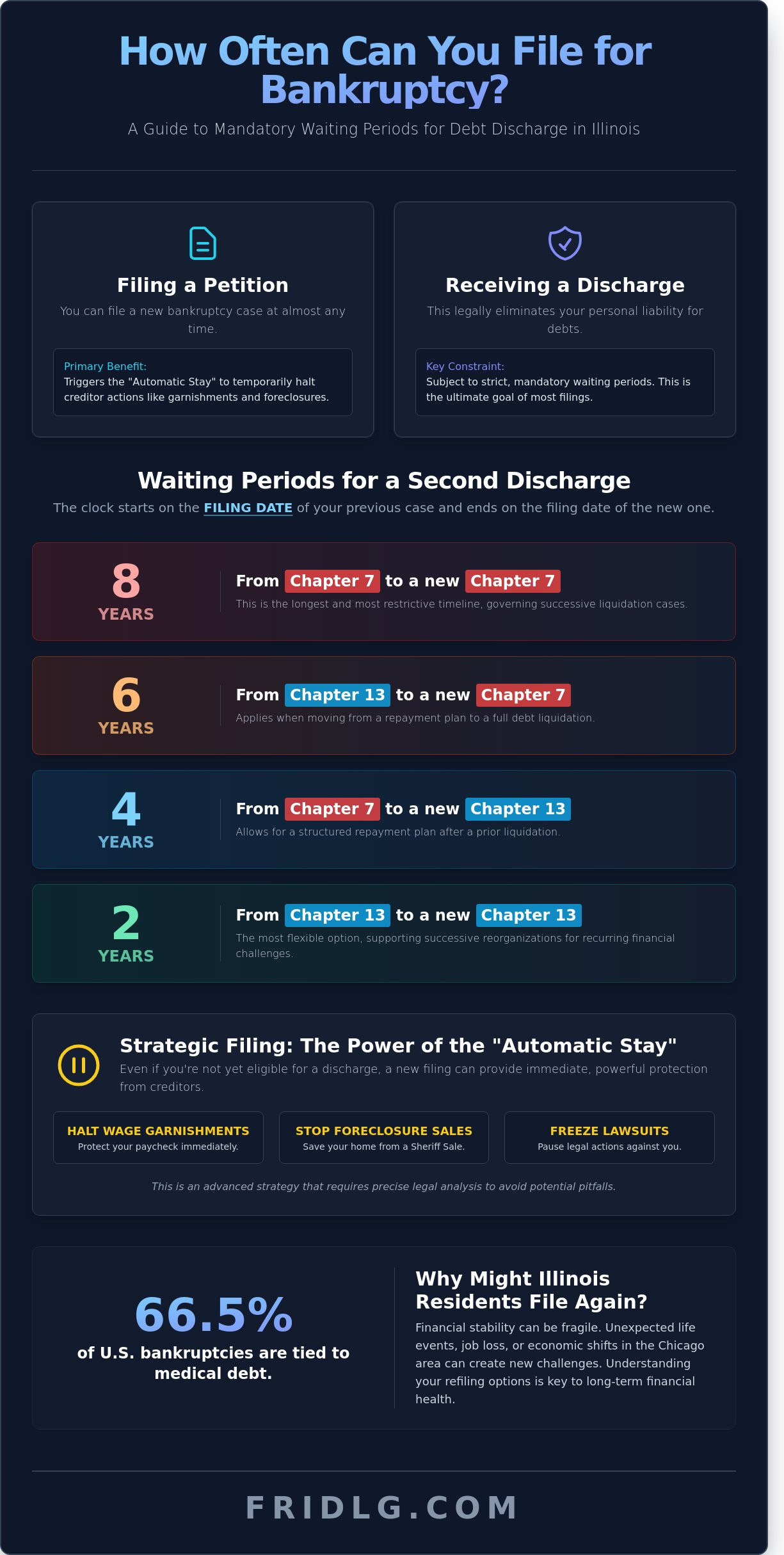
The United States Bankruptcy Code imposes rigid temporal restrictions between filings to prevent perceived system abuse. These intervals are measured precisely from the original filing date of the prior case to the filing date of the subsequent petition. Determining how often can you file bankruptcy requires a granular analysis of these statutory windows, as failing to adhere to these timelines results in a procedural dismissal without a discharge.
Chapter 7 to Chapter 7: The Longest Wait
A successive Chapter 7 discharge requires a minimum of 8 years between filing dates. This is the most restrictive timeline in the bankruptcy code. If a petitioner submits a second Chapter 7 petition at the 7-year mark, the court will likely deny the discharge, leaving the individual's assets exposed to creditors. When facing aggressive litigation, such as a Northbrook lawsuit, before this 8-year period expires, the debtor must seek alternative relief. Strategic options include negotiated settlements or utilizing a complex legal solution tailored to debt restructuring rather than liquidation.
Chapter 13 Timelines for Debt Reorganization
Chapter 13 allows for greater frequency because it involves a structured repayment plan. A debtor can receive a second Chapter 13 discharge just 2 years after the initial filing date of the previous case. Since most Chapter 13 plans span 36 to 60 months, this 2-year rule rarely restricts those who successfully completed their prior plan. It's a vital tool for managing non-dischargeable tax liabilities or curing mortgage arrears that re-accumulated after a prior reorganization. Successive filings under this chapter focus on debt management rather than immediate asset liquidation.
The rules become more nuanced when transitioning between different bankruptcy chapters. The 4-year and 6-year rules govern these cross-chapter petitions:
- The 4-Year Rule (Chapter 7 to Chapter 13): Often referred to as a "Chapter 20" strategy, this requires a 4-year wait to receive a discharge in the second case. It's frequently used to manage liens that survived a Chapter 7 liquidation.
- The 6-Year Rule (Chapter 13 to Chapter 7): Moving from a reorganization to a liquidation typically requires 6 years. However, the "70% rule" provides a significant exception. If the prior Chapter 13 plan paid 100% of unsecured claims, or at least 70% while demonstrating "best efforts," the 6-year waiting period is waived entirely.
Understanding how often can you file bankruptcy involves more than just counting years; it requires assessing the specific outcome of the previous case. If a prior case was dismissed without a discharge, these mandatory waiting periods might not apply, though other restrictions on the automatic stay could emerge. Precision in timing is the difference between a successful discharge and a wasted filing fee.
Strategic Refiling: When You Don't Need a Discharge
A bankruptcy filing's primary utility isn't always the final discharge of debt. Under 11 U.S.C. § 362, the moment a petition is filed, the court imposes an Automatic Stay. This injunction immediately halts all collection activities, including Cook County sheriff sales and wage garnishments. For many individuals in Northbrook, the goal isn't necessarily to wipe the slate clean again, but to gain the procedural breathing room necessary to manage secured assets. Even when the statutory limits on how often can you file bankruptcy prevent a new discharge, the stay remains a powerful defensive mechanism.
This approach is often referred to as a "Chapter 20" strategy. A debtor first utilizes Chapter 7 to eliminate unsecured liabilities, such as credit card debt or medical bills. Immediately following the closure of that case, they file a Chapter 13 petition. While this second filing won't result in a discharge if filed within four years of the first, it allows the debtor to handle non-dischargeable debts through a court-supervised repayment plan. This sequence provides a level of financial control that a single filing cannot achieve.
Using the Automatic Stay to Stop Foreclosure
A strategic refiling can effectively halt a foreclosure proceeding even if the debtor's eligibility for a discharge hasn't yet reset. In the Illinois legal landscape, Chapter 13 serves as a tool to cure mortgage defaults over a 3 to 5 year period. By filing the petition before a scheduled judicial sale, the homeowner forces the lender to accept a repayment plan for the arrears. Fridman Legal applies deep expertise in foreclosure defense to time these filings with surgical precision. This ensures the stay is invoked at the most critical juncture, protecting the property while a sustainable financial structure is established. The firm's focus remains on the strategic preservation of equity through disciplined legal maneuvers.
The Risks of Being Labeled an 'Abusive Filer'
The bankruptcy court maintains strict oversight to prevent what it deems "bad faith" or "abusive" filings. If a debtor had a prior case dismissed within the last 365 days, the Automatic Stay is limited to a mere 30 days. If two or more cases were dismissed in that same timeframe, the stay doesn't go into effect at all upon the new filing. To overcome these limitations, counsel must file a formal motion to extend or impose the stay, proving the new case is filed in good faith despite previous failures. This requires demonstrating a specific change in financial circumstances, such as a 20% increase in household income or the resolution of a medical crisis. Without professional guidance, serial filers risk having their cases dismissed with prejudice, which often includes a 180-day prohibition on any future filings. Understanding how often can you file bankruptcy without triggering these sanctions is vital for maintaining the court's trust and ensuring the success of a long-term debt management strategy.
Local Considerations for Northbrook and Chicago Filers
Northbrook residents filing within the Northern District of Illinois, Eastern Division, must adhere to specific jurisdictional protocols that govern the timing and frequency of debt relief. When determining how often can you file bankruptcy, the local court's evaluation of "good faith" in repeat filings remains a central pillar of your legal strategy. Trustees in the Chicago suburbs, particularly those overseeing cases from Cook County, scrutinize subsequent filings with heightened attention to detail when prior discharges occurred within the statutory windows of 2 to 8 years. The high property values in Northbrook, where the median home price reached $645,000 in early 2024, create unique challenges for those attempting to pass the Means Test while retaining significant equity.
The Illinois Means Test and Repeat Filings
Eligibility for a subsequent Chapter 7 filing depends heavily on the Illinois Means Test, which compares your current monthly income against the state's median figures. According to verified 2026 median income data projections, a household of four in Illinois must earn less than $116,420 to qualify for an automatic presumption of eligibility. Residents in the Northbrook area often find that local cost-of-living adjustments for housing and transportation don't fully offset higher-than-average salaries. This creates a narrow margin for error for repeat filers who've seen their income increase since their initial discharge. If your income exceeds these thresholds, the court requires a complex calculation of "allowable expenses" to determine if any disposable income remains to pay back creditors through a Chapter 13 plan.
Protecting Assets with Illinois Exemptions
Illinois is an "opt-out" state, meaning you can't use federal bankruptcy exemptions; you must rely on the Illinois Compiled Statutes to protect your assets. The Illinois homestead exemption provides only $15,000 of protection for an individual's primary residence, or $30,000 for a married couple filing jointly. In Northbrook, where home equity often exceeds these modest figures, a second or third bankruptcy filing requires sophisticated planning to avoid the forced sale of the property.
- Wildcard Exemption: Illinois allows a $4,000 "wildcard" exemption for any personal property, which doesn't increase or stack in subsequent filings.
- Statutory Limitations: Using these exemptions in a new case is permitted even if you used them in a prior filing, provided you still own the assets and meet the residency requirements.
- Residency Rules: You must have lived in Illinois for at least 730 days before filing to utilize these specific state protections.
The strategic timing of your case is vital to ensure that how often can you file bankruptcy aligns with your long-term wealth preservation goals. Miscalculating the window between a Chapter 7 and a Chapter 13 filing can result in a denial of discharge, leaving your assets vulnerable to Cook County creditors. Precision in these matters isn't optional; it's a requirement for maintaining your financial standing.
Strategic asset protection requires a nuanced understanding of the Northern District’s procedural nuances. Consult our legal specialists to secure your financial future.
How Fridman Legal Navigates Complex Bankruptcy Timelines
Determining exactly how often can you file bankruptcy involves a rigorous audit of federal court records and statutory waiting periods. At Fridman Legal, we don't rely on guesswork. Our methodology begins with a comprehensive analysis of your previous bankruptcy petitions, specifically examining discharge dates and dismissal orders from the last 96 months. Understanding how often can you file bankruptcy requires a precise calculation of the intervals between your specific filing and discharge dates. This forensic approach ensures that every Northbrook resident we represent receives a personalized debt relief roadmap tailored to their specific financial trajectory.
Our firm provides a transparent flat-fee structure for straightforward refiling cases, eliminating the financial ambiguity that often accompanies legal proceedings. With 20 years of dedicated experience practicing within the Northern District of Illinois, we've developed an intimate understanding of local court preferences and Trustee expectations. This institutional knowledge allows us to anticipate challenges before they manifest in your case, ensuring your petition adheres to the strict procedural standards of the Illinois court system.
The Importance of a Precise Filing Strategy
Timing isn't just a detail; it's the foundation of your eligibility. A single day's difference in your filing date can determine whether the court grants a discharge or dismisses your case without relief. For example, filing a Chapter 7 petition exactly 2,922 days after a previous Chapter 7 discharge is often mandatory to satisfy the 8-year rule. We perform a detailed audit of your PACER history and credit reports to verify these dates with absolute accuracy. We provide strategic counsel on whether it's better to act immediately to stop a 2024 foreclosure or wait a specific number of weeks to ensure your oldest tax debts become dischargeable under the 3-year rule.
Taking the First Step Toward a Clean Slate
Your initial consultation at our Northbrook office serves as a tactical briefing. To maximize this session, please bring your last two years of federal tax returns, six months of pay stubs, and any active collection notices. Our expertise extends beyond the bankruptcy code; we handle concurrent civil litigation and debt negotiation to protect your assets from every angle. If a creditor has already filed a lawsuit in Cook County, we integrate that defense into your broader insolvency strategy. It's time to secure your financial future with professional oversight. Schedule a consultation with Fridman Legal to review your bankruptcy eligibility and confirm your filing timeline today.
Securing Your Financial Trajectory in the Northern District
Navigating the technical constraints of the U.S. Bankruptcy Code requires more than a cursory understanding of the law. Determining how often can you file bankruptcy depends entirely on your prior filing history, including the mandatory eight-year interval between Chapter 7 discharges or the specific four-year wait when transitioning from Chapter 7 to Chapter 13. These statutory timelines are rigid, yet strategic refiling remains a viable tool for those seeking the protection of the automatic stay even when a discharge isn't immediately available. Precise timing is essential to ensure your petition isn't dismissed on procedural grounds.
Fridman Legal provides the specialized focus necessary for residents navigating the Northern District of Illinois. Our principal attorney leverages nearly 20 years of experience to develop complex legal solutions for clients in Northbrook and Chicago. We provide boutique, personalized service that prioritizes your long-term stability through precise procedural execution. Secure your financial future; contact Fridman Legal for a strategic bankruptcy review today. You've the opportunity to reclaim control over your finances with a partner who understands every nuance of the local court system.
Frequently Asked Questions
Can I file Chapter 7 twice in 8 years in Illinois?
No, you can't receive a second Chapter 7 discharge if your previous case was filed within the last 8 years. Under 11 U.S.C. § 727(a)(8), the court will deny your discharge if the filing dates of the two cases are less than 2,922 days apart. This statutory restriction ensures the liquidation process isn't utilized for recurring debt cycles within a single decade.
What happens if my first bankruptcy was dismissed instead of discharged?
A dismissal means your debts weren't legally eliminated, so the standard 8-year waiting period doesn't apply. You can typically refile immediately to seek relief unless the court issued a specific order under 11 U.S.C. § 109(g). This section imposes a 180-day bar on refiling if you failed to follow court orders or voluntarily dismissed the case after a creditor moved to lift the automatic stay.
How many times can you file Chapter 13 in Chicago?
There's no numerical limit on how many times you can file Chapter 13 in Chicago, but discharge eligibility is restricted. To receive a discharge in a new Chapter 13 case, 11 U.S.C. § 1328(f)(2) requires a 2-year gap from the filing date of your previous Chapter 13 discharge. Determining how often can you file bankruptcy in the Northern District of Illinois involves analyzing whether you need a discharge or just a structured 60-month repayment plan.
Does the 8-year rule start from the day I filed or the day my debt was wiped out?
The 8-year clock begins exactly on the date you filed your previous bankruptcy petition. It doesn't start from the discharge date or the day the court clerk closed the file. If you filed your first petition on March 15, 2016, you're eligible to file a new Chapter 7 case on March 16, 2024. This calculation is based on the date the case commenced, not the date of the final decree.
Can I file Chapter 13 immediately after a Chapter 7 discharge?
Yes, you can file a Chapter 13 petition immediately after your Chapter 7 case concludes to manage debts that weren't discharged. While the court allows the filing, you won't receive a Chapter 13 discharge unless 4 years have passed since the Chapter 7 filing date. This strategy is often used to pay off 100% of non-dischargeable tax debt or mortgage arrears over a 3 to 5-year period.
Will the court let me file again if I'm facing a new wage garnishment in Northbrook?
The court will permit a new filing if you meet the statutory time limits, which immediately triggers the automatic stay to stop a 15% wage deduction. In Northbrook cases, 11 U.S.C. § 362(c)(3) provides that if you had a dismissed case within the last year, the stay only lasts 30 days. Your attorney must file a formal motion within those 30 days to extend the protection for the duration of your new case.
Is there a limit to how many times I can file for bankruptcy in my lifetime?
No federal law imposes a lifetime limit on the total number of bankruptcy filings an individual can initiate. The Bankruptcy Code only regulates the frequency of discharges to prevent systemic abuse. You could technically file 10 times over a 50-year career, provided you respect the 2, 4, 6, or 8-year intervals between cases that resulted in a successful debt discharge.
What is a 'Chapter 20' bankruptcy and is it legal in Illinois?
Chapter 20 is an informal term for filing a Chapter 13 case immediately after receiving a Chapter 7 discharge, and it's entirely legal in Illinois. This sequence allows you to wipe out unsecured debt first, then use a 60-month plan to catch up on secured debts like a home in Cook County. While the second case doesn't provide a discharge, it utilizes the court's power to force a repayment schedule on creditors.

Article by
O. Allan Fridman
O. Allan Fridman has been practicing law since 2001. His practice is unique in that he does not view himself as a litigation attorney or transactional attorney. Rather, he views each area of law as a tool to pursue the best results for his clients. By practicing in both areas of law, he is able to take a 360-degree view of law. This enables the firm to catch potential drawbacks that are readily identifiable.
By practicing in litigation and transactional law and taking a holistic approach in dealing with our clients, he doesn’t put clients in box — rather, as we are all individuals, so too are the legal services we may require.
Whether it is bankruptcy or litigation or transactional, each client brings challenges and does not fit in any one box. Often times, bankruptcy clients end up not filing bankruptcy because we can achieve a better result through litigation or through an out-of-court resolution with the lender, or through a real estate sale. On the other end of the spectrum, a litigation client with multiple issues and lawsuit may fare better in a bankruptcy.
Since 2001, Allan has practiced in states and federal court, and he is a member of the trial bar of the Northern District of Illinois and admitted in the Northern District of Indiana.
We are a debt relief agency. We help people file for bankruptcy relief under the Bankruptcy Code
The materials on this site are for informational purposes only and do not constitute legal advice. Viewing this site or contacting us does not create an attorney–client relationship, and you should not act or refrain from acting based on any information here without seeking professional legal counsel.