
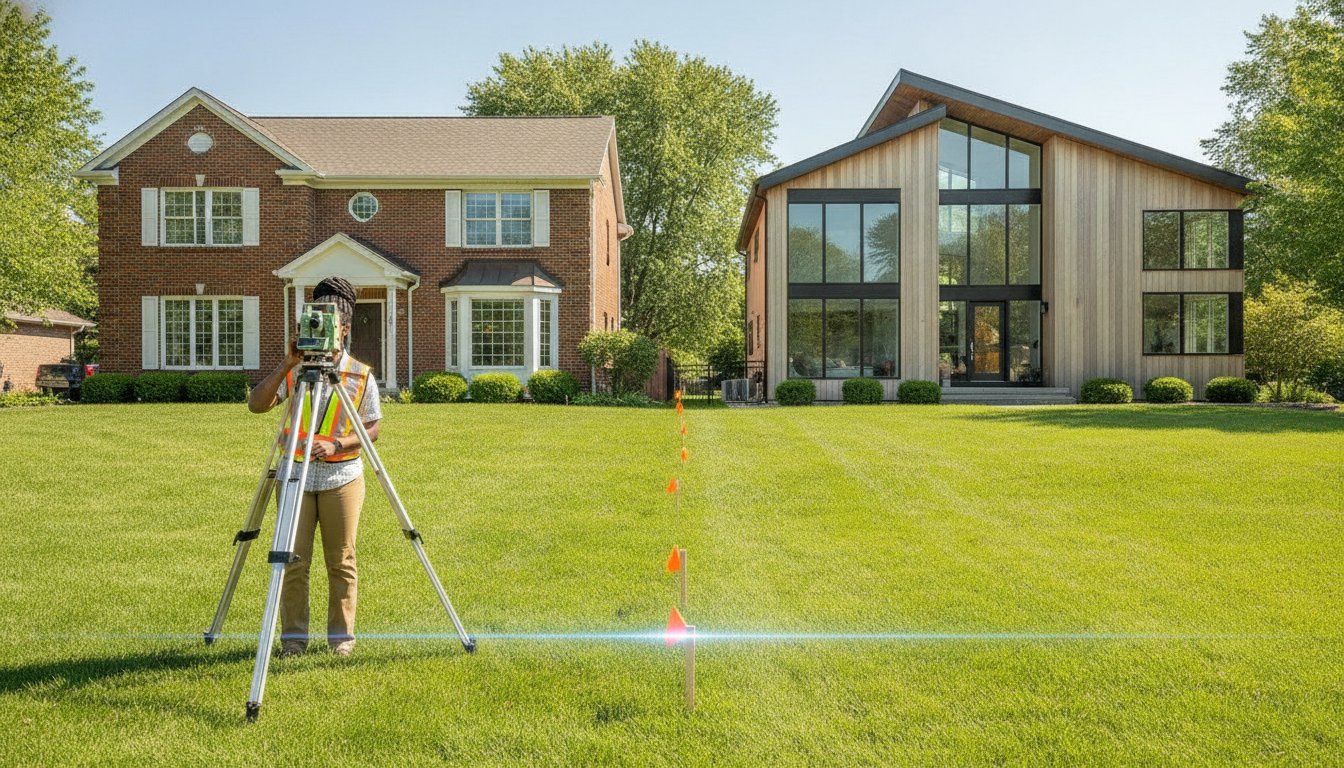
Your property line isn't just a mark on a map. It's the boundary of your most significant financial investment. When a neighbor's new fence or encroaching driveway starts eating into your yard, it's natural to feel a mix of anxiety and frustration. Finding the right legal help for property line disputes Illinois homeowners encounter is often the only way to stop these conflicts before they damage your property value or your sleep. We know you'd prefer a peaceful resolution, and we're here to show you that protecting your rights doesn't have to mean starting a neighborhood war.
This guide is designed to give you a clear path forward through the complexities of Illinois land use and adverse possession laws. You'll learn how to use a professional survey as a strategic tool and how to negotiate from a position of legal strength. We'll walk you through the 2026 landscape of boundary rights, so you can achieve a legally binding resolution and get back to enjoying your home without the constant worry of an escalating dispute.
Key Takeaways
- Identify the common triggers, from fence installations to landscaping, that can lead to a formal boundary disagreement in Illinois.
- Grasp the critical 20-year and 7-year rules for adverse possession to ensure your land remains legally yours under state law.
- Learn how to secure expert legal help for property line disputes Illinois by starting with a professional staked survey and a thorough title review.
- Explore peaceful ways to handle encroachments like sheds or patios without the stress of an immediate courtroom battle.
- Understand how civil litigation representation can offer a "quiet" but firm solution to protect your home's long term market value.
What Qualifies as a Property Line Dispute in Illinois?
At its core, a property line dispute is a formal disagreement over where your legal authority ends and your neighbor’s begins. It isn't just about a few inches of grass; it’s about the legal right to control, improve, and sell your land. These conflicts usually flare up when someone tries to change the status quo. Maybe a neighbor is installing a new vinyl fence, or perhaps you're planning a driveway expansion and realize the existing pavement already sits on the wrong side of the line. When these moments happen, seeking legal help for property line disputes Illinois homeowners face is the most effective way to protect your equity.
The "Plat of Survey" serves as the definitive baseline for these discussions. This document is a precision map created by a licensed professional that shows exactly where your boundaries lie in relation to existing structures. Many people rely on old handshake agreements between previous owners, thinking a verbal "it's okay to build there" carries weight. In reality, these informal arrangements often crumble during a title search or a modern survey, leading to expensive legal headaches. If a neighbor has been using your land for years without permission, you might even find yourself dealing with the complexities of Adverse Possession in Illinois, which is why historical accuracy is so vital.
The Legal Basis for Boundary Lines
Your property's identity is found in its legal description, a complex string of coordinates and landmarks recorded in your deed. While the Cook County Recorder of Deeds maintains these historical records, they don't always reflect current physical realities. It's also a mistake to rely on a mortgage survey from when you bought the house. Those are often "record surveys" meant for lenders, not the high precision staked surveys required to resolve a boundary conflict. Understanding the specific language in your deed is the first step toward a resolution.
When a Disagreement Becomes a Legal Dispute
A simple misunderstanding turns into a legal dispute the moment an encroachment interferes with your "quiet enjoyment" or your ability to sell the home. If a neighbor's garage is two feet over the line, a title insurance company may refuse to issue a clear policy for a future buyer, effectively freezing your property value. You can't afford to wait, either. Illinois law recognizes "laches," a concept where you can lose your right to complain if you sit on your hands while a neighbor spends money building on your land. Acting quickly ensures your rights remain intact.
Common Boundary Conflicts: Trees, Fences, and Encroachments
Most homeowners assume property disputes involve dramatic land grabs or major construction projects. In reality, suburban conflicts in places like Northbrook or Glenview are usually sparked by much smaller things. It's often a new fence that's six inches off the mark or a neighbor's driveway that gradually widens onto your lawn. If you're currently seeking legal help for property line disputes Illinois, you've likely realized that these "small" issues can create massive hurdles when it's time to sell your home or secure a renovation permit. Understanding the specific legal categories of these conflicts is the best way to start protecting your investment.
The Illinois Boundary Fence Act
While the Illinois Boundary Fence Act (765 ILCS 130/) was originally written with agricultural land in mind, its principles still influence how we handle division fences today. Generally, neighbors are expected to share the costs of building and maintaining a fence that sits on the line. However, residential areas often follow a different set of rules. In Northbrook, for example, local municipal ordinances regarding height, materials, and setbacks usually take precedence over the broader state statute. If a neighbor builds a fence without checking these local codes, they might be forced to tear it down, even if they think they're following state law. When a neighbor refuses to maintain their side of a shared barrier, the situation can quickly escalate into a civil matter.
Dealing with Encroaching Structures
An encroachment happens when a neighbor builds something that physically crosses your property line. We categorize these as either temporary or permanent. A "temporary" encroachment might be a movable garden shed or a stacked woodpile. A "permanent" encroachment is much more serious, involving foundations, driveways, or retaining walls. Driveways are a frequent suburban flashpoint because they're often poured without a fresh survey, leading to years of unintentional trespassing.
For minor issues, known as "de minimis" encroachments, you might choose to ignore them, but doing so without a written agreement can be risky. Over time, that small overlap could lead to a claim of adverse possession. If the neighbor isn't cooperating, you may need to look into the Illinois Permanent Survey Act. This law provides a specific judicial process for establishing boundaries when the lines are lost or in dispute. Using this formal path ensures that the resolution is recorded and legally binding for all future owners.
Tree law adds another layer of complexity. In Illinois, you have the right to trim branches or roots that cross onto your property, but you can't kill the tree in the process. If a neighbor's tree falls and damages your house, liability usually depends on whether the tree was healthy or visibly decayed. Dealing with these nuances requires a steady hand and a clear understanding of local case law. If you're feeling overwhelmed by a neighbor's latest project, reaching out for civil litigation representation can help you draw a firm line before the situation worsens.
Adverse Possession and Prescriptive Easements in Illinois
It's a unsettling thought, but in Illinois, it's possible to lose legal ownership of your land simply because a neighbor used it for a long enough time without your objection. This isn't just about "squatters" in abandoned buildings. It happens in quiet suburban backyards when a fence is misplaced or a shed is built over the line. If you're worried that a neighbor’s long term use of your yard is becoming permanent, getting legal help for property line disputes Illinois homeowners face is vital. The law provides clear timelines, and if you miss them, the map of your property could change forever.
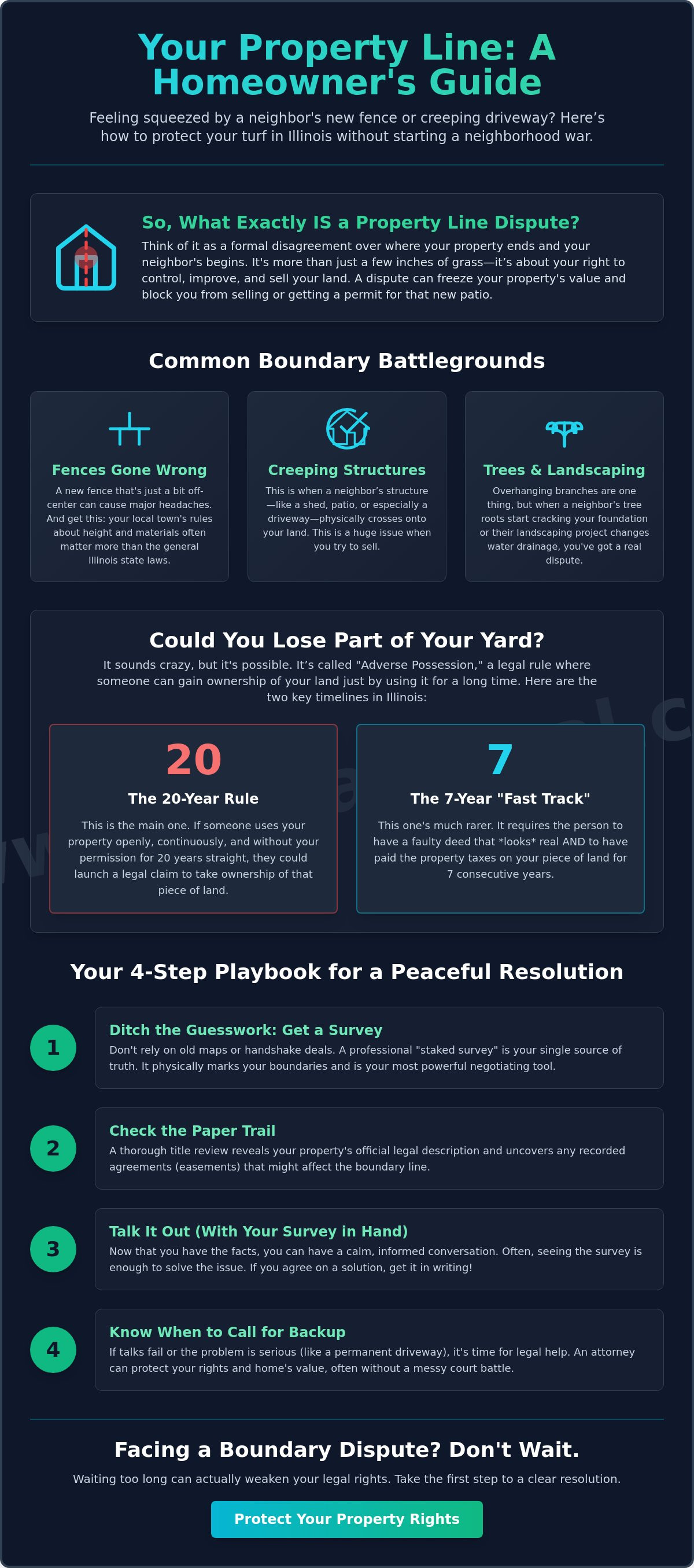
The standard rule in Illinois is the 20-year statute of limitations. Under 735 ILCS 5/13-101, a person can claim ownership of land if their possession has been hostile, actual, open, notorious, and exclusive for two full decades. "Hostile" doesn't mean they were aggressive; it just means they used the land without your formal permission. If they've mowed that extra strip of grass and treated it as their own since 2006, they might have a legitimate claim to it today. This is why a "staked survey," which we discussed earlier, is your first line of defense in proving exactly where their rights should end.
Squatter’s Rights vs. Boundary Disputes
Illinois courts set a very high bar for adverse possession because taking someone’s land is a serious matter. The neighbor must prove they intended to possess the land, and their use must be so obvious that any reasonable owner would have noticed it. You can "break" their 20-year timeline by giving them written permission to use the land or by physically reclaiming it. Once you grant permission, their use is no longer "hostile," and the clock for adverse possession stops immediately. It’s a simple strategic move that can save you years of litigation.
The "Color of Title" Shortcut
There is a much faster way for a neighbor to claim your land, known as the 7-year rule. If a neighbor has "color of title," meaning a document that looks like a valid deed but contains a mistake, and they pay the property taxes on that land for seven consecutive years, they can claim legal ownership. This "good faith" claim is a common issue with large suburban lots where old deeds might be vague. You can find more detail on how these overlaps occur in this overview of Illinois property line and fence laws.
Finally, there's the prescriptive easement. This doesn't give your neighbor ownership of the land, but it gives them a permanent legal right to keep using it, such as a shortcut across your driveway. Like adverse possession, this requires 20 years of continuous use. Whether it's a full ownership claim or just a permanent right of way, the goal is the same: you need to assert your rights before the calendar does it for you.
How to Resolve a Property Line Dispute Without a Lawsuit
Most homeowners don't want to spend years in a courtroom over a few feet of dirt. Litigation is expensive, time consuming, and permanently ruins neighborly relations. Fortunately, the vast majority of boundary conflicts can be settled through strategic, out of court steps. When you seek legal help for property line disputes Illinois, the first goal is almost always to find a "quiet" solution that protects your property rights without the need for a judge's intervention. By following a structured process, you can often reach a resolution that is both legally binding and far more affordable than a full scale trial.
The process begins with solid evidence. You'll need to order a fresh, professional staked survey to confirm the physical boundaries against your legal deed. Once you have this in hand, a lawyer should review your title history to ensure there aren't any hidden easements or historical errors that complicate your claim. If the survey confirms an encroachment, the next step is sending a formal "Notice of Encroachment" letter. This isn't necessarily a threat of a lawsuit; it's a professional way to put the neighbor on notice and stop the clock on any potential adverse possession claims. From there, you can move toward more collaborative tools like mediation or a formal agreement.
The Power of a Boundary Line Agreement
A Boundary Line Agreement is one of the most effective tools in real estate law. It’s essentially a contract where both parties agree on a specific line, even if it differs slightly from historical records. This is particularly useful if a structure like a garage was built slightly over the line decades ago. To make it permanent, the agreement must be recorded with the Cook County Clerk or the relevant local recorder's office. This ensures that the new boundary is legally recognized for all future buyers, preventing the dispute from resurfacing when you eventually decide to sell your home. It’s a cost effective way to "fix" a map without a trial.
Using Mediation to Save Your Sanity
If direct conversation fails, mediation offers a middle ground. A neutral third party helps both neighbors discuss the issue and find a compromise, such as a land swap or a small payment for an easement. Mediation can be non binding, where the mediator just suggests solutions, or binding, where both parties agree to follow the final decision. To succeed here, you need to arrive prepared with your staked survey, photographs of the encroachment, and your deed. This structured environment often de-escalates the tension that usually builds up in neighborhood conflicts.
Only when these steps fail should you consider a "Quiet Title" action, which is the nuclear option of property law. It asks the court to make a final, permanent ruling on who owns what. Because this is a high stakes move, it’s best to have an experienced team handle the heavy lifting. If you're ready to resolve your boundary issues once and for all, reaching out for Civil Litigation Representation can provide the strategic guidance you need to protect your home's value.
Why You Need a Northbrook Real Estate Attorney
Property disputes in Northbrook and the surrounding Cook County suburbs aren't just legal puzzles; they're deeply personal. When you're searching for legal help for property line disputes Illinois, you need someone who understands the local landscape, both literally and figuratively. Fridman Legal brings a specialized focus to these conflicts, combining a deep knowledge of residential real estate law with civil litigation representation. With nearly 20 years of experience, we've learned that the best way to handle a loud, stressful neighbor dispute is often with a quiet, strategically sound legal solution that avoids the drama of a courtroom whenever possible.
Local knowledge is a massive advantage in Cook County courts. Every municipality has its own quirks, and Northbrook is no exception. We understand how local judges view boundary discrepancies and how the Cook County Recorder's office processes the agreements we discussed earlier. This isn't just about winning a fight; it's about making sure your property remains a clean asset rather than a liability. We also look at the bigger picture, ensuring your boundary protections are integrated into your broader estate planning, so your heirs don't inherit a legal battle along with the family home.
Personalized Legal Strategy
Every lot is unique, and every neighbor dynamic is different. That’s why we don't believe in a one size fits all approach. A custom tailored strategy allows us to balance an aggressive defense of your rights with the kind of cost effective negotiation that keeps you out of the courtroom. Whether you're dealing with a minor fence overlap or a major encroachment, we focus on the specific details of your deed and survey. You can learn more about our civil litigation representation to see how we handle these high stakes suburban matches.
Protecting Your Real Estate Investment
The ultimate goal is to keep your home sellable and your title clear of any red flags. A boundary issue that seems minor today can become a deal breaker when you're trying to close on a sale. Working with a real estate lawyer for closing in Northbrook & Chicago ensures that these issues are caught and resolved long before they can derail your transaction. It’s about being proactive rather than reactive to protect your equity. Ready to protect your land? Contact Fridman Legal today and let’s secure your property’s future.
Taking the Next Step Toward Boundary Clarity
Your property is likely your most significant investment, and leaving its boundaries to chance or handshake agreements is a risk you don't need to take. We've seen how a professional staked survey and a firm grasp of Illinois's 20-year adverse possession rules provide the leverage you need to protect your land. By prioritizing mediation and formal agreements, you can resolve even the most tense neighbor conflicts without the exhaustion of a courtroom battle. Securing legal help for property line disputes Illinois residents face is about more than winning an argument; it's about ensuring your home remains a clear, sellable asset for years to come.
With nearly 20 years of experience in both real estate law and civil litigation, Fridman Legal offers the strategic depth required to handle complex boundary issues. From our Northbrook office, we provide the suburbs and the greater Chicago area with sophisticated, results-oriented representation. We're ready to help you draw a definitive line and restore the peace of mind you deserve. To get started on a solution that works for you, Schedule a Consultation with Fridman Legal today. Your property's future is worth protecting, and we're here to guide you every step of the way.
Frequently Asked Questions
Can my neighbor build a fence exactly on the property line in Illinois?
Yes, a neighbor can build a fence on the property line, but it is typically classified as a division fence under the Illinois Fence Act. This designation usually means that both property owners are responsible for the costs of construction and ongoing maintenance. It's vital to check your specific Northbrook or local municipal ordinances first, as many suburban codes have distinct rules for residential setbacks that differ from state agricultural statutes.
How much does a property line survey cost in the Chicago area?
A standard boundary survey in the Chicago area generally ranges from $600 to $2,500. While the average cost for various land surveys in the region is approximately $2,383, your final price depends on the lot size and how difficult it is to locate original markers. Local surveyors in the city typically charge hourly rates between $85 and $175 for their field work and mapping services.
What is the "Right to Farm" law in Illinois and does it apply to me?
The Illinois Right to Farm law is designed to protect agricultural operations from nuisance lawsuits, but it almost never applies to residential property line disputes in suburban neighborhoods. This statute prevents new residents from suing established farms over common agricultural smells or noises. If your dispute involves a suburban fence or a driveway overlap, your rights are governed by standard real estate and civil litigation rules instead.
Can I cut branches of a neighbor’s tree that hang over my yard?
You have the legal right to trim any branches or roots that encroach onto your property, provided you stay on your side of the boundary line. You cannot enter your neighbor's land to perform the work, and you must ensure the trimming doesn't kill or significantly damage the tree. If your actions cause the tree to die, you may be held liable for the full replacement cost of the tree under Illinois law.
How long do I have to challenge an encroachment in Illinois?
You generally have 20 years to challenge a boundary encroachment before the neighbor can claim ownership through adverse possession. However, waiting is risky because Illinois courts also follow the doctrine of laches, which can bar your claim if you sit on your rights while a neighbor spends significant money on a structure. Getting legal help for property line disputes Illinois homeowners face early on is the best way to prevent a permanent loss of land.
Does title insurance cover property line disputes?
Title insurance might cover a boundary dispute, but most standard policies include an "exception" for matters that a current, accurate survey would have disclosed. If you didn't have a staked survey performed at the time of your closing, the insurance company will likely deny coverage for the conflict. You'll need to have a lawyer review your specific policy language to determine if your dispute falls under a covered risk.
What happens if my neighbor’s driveway is on my property?
A driveway on your property is considered a permanent encroachment that must be addressed to keep your title clear for a future sale. You can resolve this by negotiating a formal Boundary Line Agreement or a recorded easement that defines the neighbor's right to use that specific strip of land. Without a formal agreement, the neighbor could eventually gain a prescriptive easement, which is a permanent legal right of way across your property.
Is a 100-year-old fence considered the legal property line?
A 100-year-old fence is not the automatic legal boundary, but it can become the line through the doctrine of acquiescence if both neighbors have treated it as such for a long period. While a modern survey might show the fence is misplaced, courts are often reluctant to move a boundary that has been respected for generations. The original deed description and the history of how the land was used will both play a role in a final determination.

Article by
O. Allan Fridman
O. Allan Fridman has been practicing law since 2001. His practice is unique in that he does not view himself as a litigation attorney or transactional attorney. Rather, he views each area of law as a tool to pursue the best results for his clients. By practicing in both areas of law, he is able to take a 360-degree view of law. This enables the firm to catch potential drawbacks that are readily identifiable.
By practicing in litigation and transactional law and taking a holistic approach in dealing with our clients, he doesn’t put clients in box — rather, as we are all individuals, so too are the legal services we may require.
Whether it is bankruptcy or litigation or transactional, each client brings challenges and does not fit in any one box. Often times, bankruptcy clients end up not filing bankruptcy because we can achieve a better result through litigation or through an out-of-court resolution with the lender, or through a real estate sale. On the other end of the spectrum, a litigation client with multiple issues and lawsuit may fare better in a bankruptcy.
Since 2001, Allan has practiced in states and federal court, and he is a member of the trial bar of the Northern District of Illinois and admitted in the Northern District of Indiana.
We are a debt relief agency. We help people file for bankruptcy relief under the Bankruptcy Code
The materials on this site are for informational purposes only and do not constitute legal advice. Viewing this site or contacting us does not create an attorney–client relationship, and you should not act or refrain from acting based on any information here without seeking professional legal counsel.


