

You might think filing for Chapter 7 is the only way to escape the crushing weight of debt, but for many people, it's actually the riskiest move for their long-term stability. It is completely normal to feel a sense of dread when those collection calls start coming in or when you worry about whether your home in Cook County is truly safe. You want a way out, but the thought of losing your credit score or your car feels like a price that's simply too high to pay. Fortunately, there are several effective alternatives to chapter 7 bankruptcy Chicago residents can use to protect their property and finally stop the harassment without losing everything they've worked for.
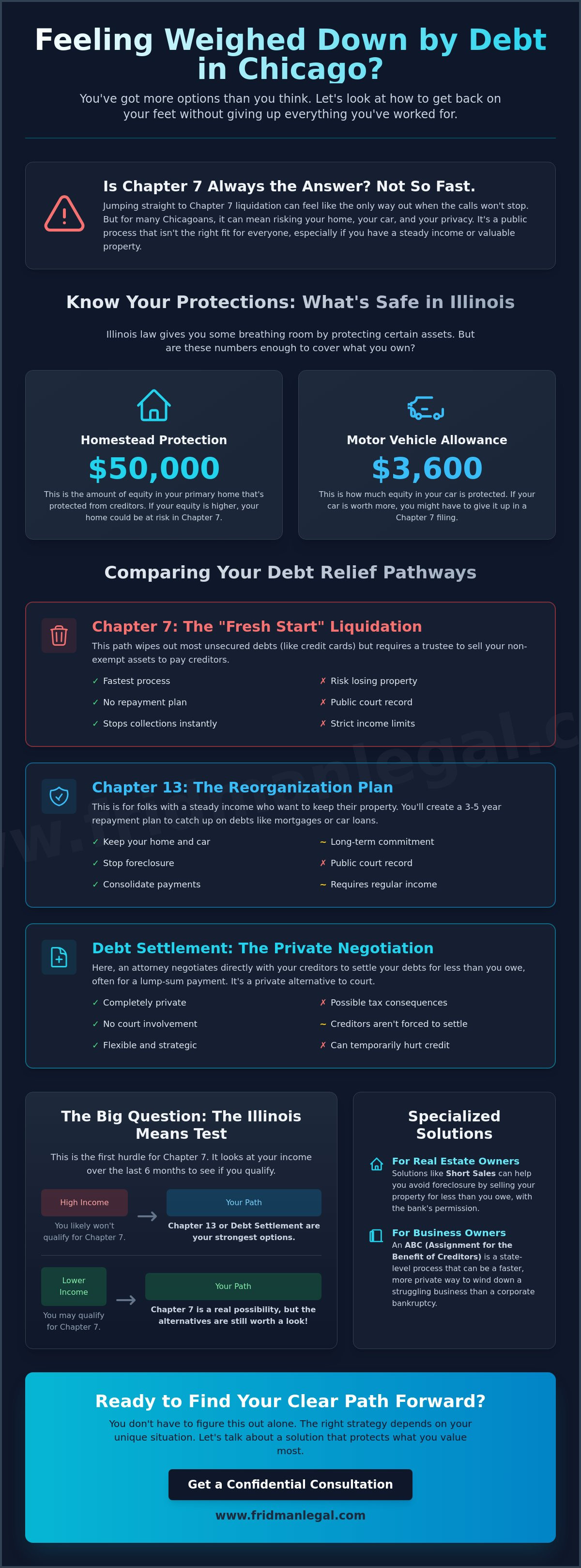
In this guide, we'll show you how to regain financial control through practical, non-court, and legal strategies that prioritize your assets. You'll discover how to leverage the latest Illinois exemptions, like the $50,000 homestead protection and the $3,600 motor vehicle allowance, to keep what's yours. We're going to walk through the differences between Chapter 13 reorganization and debt settlement so you can choose a clear, manageable repayment timeline that actually works for your life. By the end of this article, you'll have a much better sense of which path leads to your financial recovery.
At a Glance: Your Path to Debt Relief
- Discover why exploring alternatives to chapter 7 bankruptcy Chicago is often the best way to keep your financial business private and avoid a public filing.
- Learn how attorney-led debt negotiations can settle your balances for less than you owe, so you don't have to deal with the rigid rules of a court case.
- Understand why Chapter 13 is such a strong tool for homeowners who want to stop a foreclosure and keep their equity intact.
- Explore specialized solutions like short sales and ABCs that are built for the unique needs of Chicago real estate and business owners.
- Get a clear look at how to use the Illinois Means Test to see which path fits your income and your goals for the future.
Why Chicagoans Look Beyond Chapter 7 for Debt Relief
Living in Chicago today involves managing a high cost of living that often leaves little room for financial setbacks. When credit card balances climb or medical bills pile up, the pressure can feel insurmountable. While many people immediately think of Chapter 7 as the "standard" way out, it isn't always the most strategic choice for everyone in Cook County. For many professionals and business owners, the public nature of a bankruptcy filing carries a stigma they'd rather avoid. They often prefer private settlements that keep their financial history out of the public record while still providing a path to stability.
Asset protection is another major reason to look for bankruptcy alternatives. Even with the updated 2026 Illinois exemptions, which now protect $50,000 in home equity for an individual and $3,600 for a motor vehicle, these limits might not be enough. If you own a home in a neighborhood where property values have surged or if you rely on a vehicle worth more than the exemption, a Chapter 7 filing could put those assets at risk of liquidation. Finding alternatives to chapter 7 bankruptcy Chicago residents can trust often means looking for ways to settle debt without handing over the keys to your property.
The Emotional and Financial Reality of Debt in Cook County
The constant stress of wage garnishment and aggressive collection calls can make it hard to focus on anything else. It's exhausting to deal with creditors who don't seem to care about your situation. While Chapter 7 offers a "fresh start" by wiping out most unsecured debts, it can also feel like a surrender. Many people prefer a "managed recovery" where they take an active role in resolving their obligations. If you have a steady income but simply need more time or a lower total balance, jumping straight into a liquidation bankruptcy might be the wrong tool for your specific needs.
When the Illinois Means Test Forces Your Hand
Sometimes, the choice to look for alternatives isn't just about preference; it's about eligibility. The Illinois Means Test looks at your average income over the last six months to determine if you qualify for Chapter 7. If you're a high-earner or if your income fluctuated significantly in early 2026, you might find yourself disqualified from filing for Chapter 7 altogether. This doesn't mean you're stuck without help. It simply means your path to relief will involve different strategies, such as debt negotiation or a structured repayment plan that fits within the legal frameworks of the state.
Negotiating Your Way Out: Debt Settlement and Creditor Workouts
If you're looking for alternatives to chapter 7 bankruptcy Chicago offers several paths that don't involve the federal court system. One of the most effective strategies is attorney-led debt negotiation. Unlike the aggressive and often unreliable tactics used by national settlement "mills," a professional legal approach focuses on strategic leverage. Creditors are businesses, and they're primarily focused on their bottom line. They know that if you're pushed into a Chapter 7 liquidation, they might receive nothing at all. This reality often makes them willing to accept "cents on the dollar" to resolve an account quickly and avoid the total loss a bankruptcy might represent.
Negotiating on your own can be an uphill battle. Credit card companies and lenders often use sophisticated scripts to keep you paying high interest rates. When a law firm handles the communication, it changes the dynamic. It signals that you're taking a calculated approach to your financial recovery and that you understand the legal frameworks available to you. Resources like Illinois Legal Aid highlight the importance of knowing your rights before entering these discussions. It's also vital to remember the tax side of things. The IRS generally views forgiven debt as taxable income, meaning you'll likely receive a 1099-C form. Before you sign any agreement, you should consult with a professional to understand how a settlement will impact your next tax return.
The Art of the Lump-Sum Settlement
Debt settlement is a strategic contract between debtor and lender to satisfy a debt for less than the full balance. To make this work, you'll typically stop making monthly payments and instead build a "settlement fund" in a dedicated account. The timing of the "ask" is everything. Creditors are most likely to say yes when an account is several months past due but hasn't yet been sold to a third-party debt buyer. This window provides the maximum leverage to secure a significant discount on what you owe.
Direct Repayment Plans and Creditor Workouts
Sometimes you don't need to wipe out the debt entirely; you just need the interest rates to stop suffocating your budget. Many lenders offer "Hardship Programs" if you ask for them specifically. These plans can lower your interest rates to near zero for a set period, allowing your payments to actually hit the principal balance. Just make sure every agreement is in writing. A verbal promise from a phone representative won't protect you if the account is later transferred to a collection agency.
Chapter 13 vs. Debt Consolidation: Which Path Fits Your Income?
If you earn too much to pass the Means Test or if you're determined to keep your home, your focus usually shifts to repayment strategies. This is where the choice between a court-ordered plan and a private loan becomes critical. In your search for alternatives to chapter 7 bankruptcy Chicago offers two very different routes: Chapter 13 or a debt consolidation loan. While both aim to roll your debts into one monthly payment over a three to five year timeline, the legal protections they provide are worlds apart. A private loan is just a contract. A Chapter 13 filing is a federal court order that forces creditors to play by the rules.
One of the biggest differences is how these options handle aggressive collections. If you take out a consolidation loan, you're still vulnerable to lawsuits if you miss a payment. Chapter 13, however, triggers an automatic stay. This legally bars creditors from calling you, suing you, or garnishing your wages. You should also remember that if you have significant tax debt, an IRS payment plan can be a helpful tool, but it won't stop your credit card companies from pursuing you. Chapter 13 handles all of it under one umbrella, often for a fraction of what you actually owe.
Chapter 13: The Homeowner’s Best Friend
For Chicago homeowners, Chapter 13 is often the superior choice because it stops foreclosure in its tracks. It allows you to take any mortgage arrears and spread them out over the length of your plan. You might even benefit from a "cramdown" strategy, which can reduce the principal balance on certain secured debts, like a car loan, to the actual value of the property. This is a powerful way to regain equity. Of course, for those who find themselves without a regular source of income to support a plan, Chapter 7 bankruptcy Illinois remains the primary path for a total discharge.
The Reality of Debt Consolidation Loans
Personal loans can be tempting, but they often feel like moving deck chairs on the Titanic if the interest rates are too high. In the current Chicago economy, many consolidation loans carry rates that don't actually save you money. You'll want to watch out for predatory companies that charge massive upfront fees or promise results that sound too good to be true. If the loan doesn't significantly lower your total monthly output while keeping your assets safe, it might not be the relief you need. Always check the math before signing away your future income to a new lender.
Specialized Illinois Options: ABCs and Real Estate Solutions
Sometimes the most effective alternatives to chapter 7 bankruptcy Chicago residents can access aren't found in federal court. If you're a business owner or a homeowner with a property that's lost its value, Illinois law provides specific mechanisms to resolve your obligations with more privacy and control. These strategies often allow you to bypass the rigid requirements of a bankruptcy trustee while still achieving a clean break from your creditors. Whether it's winding down a company or handling an underwater mortgage, the focus is on a strategic exit rather than a court-ordered liquidation.
In some cases, the best strategy might even be a "do nothing" approach. This applies when you're considered judgment proof under Illinois law. If your income is exempt and your assets fall below the 2026 protection levels, such as the $50,000 homestead exemption or the $3,600 motor vehicle allowance, creditors can't legally seize anything to satisfy a debt. While this doesn't stop the debt from existing, it prevents a collector from taking your property, which can buy you enough time to negotiate a settlement on your own terms.
The "ABC" of Business Liquidation in Chicago
For small business owners in the city, an Assignment for the Benefit of Creditors (ABC) is a powerful tool that often replaces the need for a Chapter 7 filing. An ABC is an Illinois common-law alternative that allows a business to transfer assets to a third party for liquidation and distribution. This process is generally faster and less expensive than a formal bankruptcy. It allows you to select a trustee who understands your specific industry, ensuring that the wind-down happens quietly and efficiently without the public scrutiny of a federal case.
Strategic Real Estate Moves
If your primary source of stress is a mortgage you can't afford, real estate solutions like short sales or a deed-in-lieu of foreclosure can protect your credit better than a bankruptcy ever could. A short sale allows you to sell the property for less than what you owe with the lender's permission, often wiping out the remaining balance. This is where having a real estate lawyer for closing becomes essential. They can ensure the lender signs a waiver of deficiency so you aren't hunted for the difference later. If you're facing a potential loss of your home, you should contact our team to discuss how foreclosure defense can provide the leverage needed for a favorable negotiation.
How to Choose the Best Debt Relief Strategy in Chicago
Choosing the right path isn't just about finding the quickest way out of debt. It's about finding the one that leaves you in the strongest position for the long term. To do this effectively, you'll need to follow a structured approach that accounts for your unique circumstances in the Chicago area. You don't want to make a decision today that compromises your ability to own a home or a business five years from now.
Start by conducting a full inventory of your financial life. This means more than just listing your credit card balances. You need to look at your assets, your total debt, and your actual monthly Chicago living expenses. Being honest about what it costs to live in the city will help you determine if a repayment plan is truly sustainable or if you need a more aggressive settlement strategy. If your expenses are consistently higher than your take-home pay, moving debt around won't solve the underlying issue.
Next, you'll need to determine if you pass the Illinois Means Test. As we've discussed, if your income is above the state median, your search for alternatives to chapter 7 bankruptcy Chicago becomes a legal requirement. Even if you do qualify for Chapter 7, you should evaluate your long-term goals. If keeping your home in a neighborhood with rising property values is your priority, a different path might be safer. Finally, always consult with a professional who understands the specific nuances of the Cook County court system. Local knowledge can be the difference between protecting an asset and losing it to a creditor's claim.
The Importance of a Local Perspective
National debt relief firms often treat every state the same. They might miss the fact that Illinois significantly increased its homestead and motor vehicle exemptions in early 2026. At Fridman Legal, we believe in an "Alternatives First" philosophy. We don't just push you toward the quickest filing. We look at whether debt negotiation or a Chapter 13 plan serves your interests better. You can find more information or request a personalized evaluation on our contact-us page.
Your Financial Future Beyond 2026
Your financial life doesn't end when you resolve your debt. Whether you choose a settlement or a repayment plan, you can expect to start rebuilding your credit almost immediately. The peace of mind that comes from having a finalized, legal debt strategy is worth the effort of the planning process. If you're ready to see which path fits your situation, schedule a consultation with Fridman Legal to explore your specific alternatives and take back control of your future.
Secure Your Financial Recovery in Cook County
Finding a way out of debt is about more than just numbers; it's about protecting the life you've built here in Chicago. We've explored how you can use the state's generous 2026 exemptions to keep your home and car while pursuing a path that fits your income. Whether you choose a private settlement or a structured repayment plan, the goal is to regain control without the uncertainty of a total liquidation. Exploring the various alternatives to chapter 7 bankruptcy Chicago offers is the first step toward a more stable future.
At Fridman Legal, we bring nearly 20 years of Illinois bankruptcy and debt experience to every case. We focus on a personalized, results-driven legal strategy that accounts for the specific nuances of the Cook County and Northbrook courts. You don't have to guess which option is best for your family or your business. When you're ready to move forward with confidence, it's time to Talk to a Chicago Debt Expert at Fridman Legal. You have the power to change your financial narrative, and we're here to help you navigate the way.
Frequently Asked Questions
Is it better to do debt settlement or file for bankruptcy in Chicago?
Whether debt settlement or bankruptcy is better depends on your specific assets and your need for privacy. Debt settlement is a private contract that doesn't appear in public court records, which many Chicago professionals prefer. If you have a home with equity exceeding the $50,000 individual exemption, settlement can protect that equity from a trustee. Bankruptcy is a powerful tool, but it's a public process that stays on your credit report longer.
Can I stop a lawsuit in Illinois without filing for bankruptcy?
You can stop a lawsuit in Illinois by reaching a settlement or a workout agreement with the creditor's attorney. This often involves paying a lump sum or starting a structured payment plan in exchange for the creditor dismissing the case. It's a common way to avoid a judgment and potential wage garnishment without having to step into a bankruptcy courtroom. Getting this agreement in writing is essential to ensure the lawsuit is permanently resolved.
What happens if I make too much money to file Chapter 7 in Illinois?
If your income exceeds the Illinois median and you fail the Means Test, you'll need to explore alternatives to chapter 7 bankruptcy Chicago offers. Chapter 13 is the most common legal alternative, allowing you to pay back a portion of your debt over three to five years. If a court-ordered plan doesn't appeal to you, private debt negotiation is another path to resolve those balances without the rigid oversight of the federal court system.
Will my credit score recover faster with an alternative to bankruptcy?
Credit scores can often bounce back more quickly after a successful debt settlement or Chapter 13 than after a Chapter 7 discharge. While any debt resolution causes an initial drop, showing that you've settled your obligations can look better to some future lenders. It's about showing a proactive effort to resolve your financial situation. Many people find they can qualify for new credit or even a mortgage sooner by avoiding a total liquidation filing.
What is an Assignment for the Benefit of Creditors (ABC) in Illinois?
An Assignment for the Benefit of Creditors is an out-of-court liquidation process governed by Illinois common law. A business owner transfers all company assets to an independent third party, known as the assignee, who then sells the assets to pay off creditors. It's a strategic way for Chicago businesses to wind down operations more efficiently and with less expense than a federal bankruptcy filing. This process offers more control over how the business assets are handled.
Can a debt settlement lawyer really stop creditor harassment?
A lawyer can put an end to creditor harassment by invoking your rights under state and federal law. Once you've hired an attorney for debt negotiation, collectors are generally required to stop calling your home or workplace. They have to deal with your lawyer instead. This is one of the biggest benefits of seeking alternatives to chapter 7 bankruptcy Chicago through a professional law firm, as it provides immediate relief from the stress of constant collection efforts.
How long does a debt workout plan usually take to complete?
Most private debt workout plans are designed to be completed within two to four years. The length of the plan is usually tied to how fast you can save up enough money to offer a lump-sum settlement. If you're able to settle your accounts earlier, the process can be much shorter than the mandatory five-year timeline often required in a Chapter 13 case. It's a flexible timeline that adjusts based on your specific financial recovery.

Article by
O. Allan Fridman
O. Allan Fridman has been practicing law since 2001. His practice is unique in that he does not view himself as a litigation attorney or transactional attorney. Rather, he views each area of law as a tool to pursue the best results for his clients. By practicing in both areas of law, he is able to take a 360-degree view of law. This enables the firm to catch potential drawbacks that are readily identifiable.
By practicing in litigation and transactional law and taking a holistic approach in dealing with our clients, he doesn’t put clients in box — rather, as we are all individuals, so too are the legal services we may require.
Whether it is bankruptcy or litigation or transactional, each client brings challenges and does not fit in any one box. Often times, bankruptcy clients end up not filing bankruptcy because we can achieve a better result through litigation or through an out-of-court resolution with the lender, or through a real estate sale. On the other end of the spectrum, a litigation client with multiple issues and lawsuit may fare better in a bankruptcy.
Since 2001, Allan has practiced in states and federal court, and he is a member of the trial bar of the Northern District of Illinois and admitted in the Northern District of Indiana.
We are a debt relief agency. We help people file for bankruptcy relief under the Bankruptcy Code
The materials on this site are for informational purposes only and do not constitute legal advice. Viewing this site or contacting us does not create an attorney–client relationship, and you should not act or refrain from acting based on any information here without seeking professional legal counsel.