
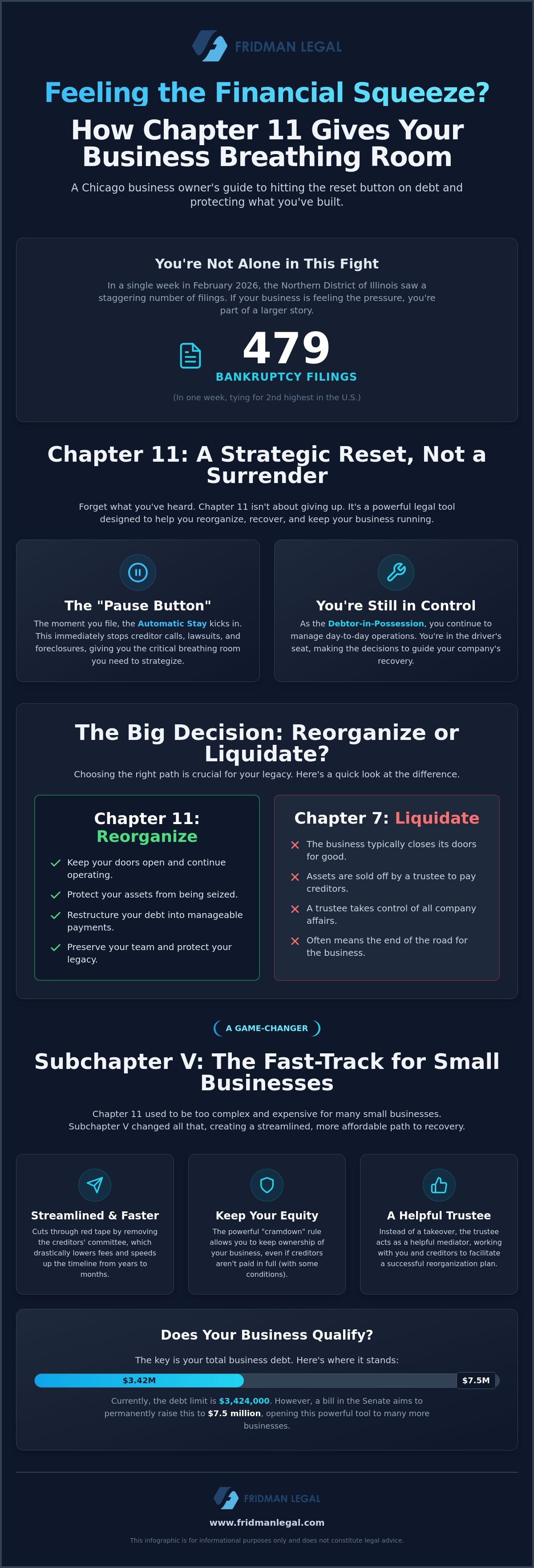
Did you know that in a single week in February 2026, the Northern District of Illinois recorded 479 bankruptcy filings, tying for the second highest in the country? If your business is currently facing aggressive creditors or the weight of rising interest rates, you're definitely not the only one in this position. It's completely normal to feel overwhelmed by the fear of losing a family legacy or confused by complex terms like debtor-in-possession. Finding a reliable chapter 11 bankruptcy attorney chicago is the first step toward silencing the phones and protecting what you've built.
We understand that you want to keep your doors open and your staff employed without the constant threat of liquidation. This guide will show you exactly how to hit the reset button on your business debt while keeping your assets fully protected. We'll walk through a clear path to restructuring that provides immediate relief from creditor pressure and sets a strategy for staying operational through 2026 and beyond.
Key Takeaways
- You'll see how Subchapter V offers a streamlined path that helps small businesses reorganize without the high costs or red tape of a traditional filing.
- We explain why the courtroom provides a "pause button" that forces creditors to stop their collection efforts, giving you the breathing room you need to recalibrate.
- Consulting a chapter 11 bankruptcy attorney chicago helps you navigate the specific expectations of the Northern District of Illinois judges at the Dirksen Federal Building.
- You'll learn the key differences between informal debt settlement and Chapter 11, including why the court's protection is often the only way to save a family legacy.
- Discover how a strategic reorganization plan focuses on long term stability so you can keep your doors open and your assets protected.
What Is Chapter 11 Bankruptcy and Is It Right for Your Chicago Business?
Chapter 11 is often misunderstood as a white flag of surrender. In reality, it's a sophisticated legal tool that acts like a strategic "pause button" for your creditors. When you work with an experienced chapter 11 bankruptcy attorney chicago, you aren't looking for an exit. You're looking for a way to keep your business alive and kicking. The primary goal here is debt restructuring. It allows you to reorganize your financial obligations so they actually align with your current cash flow, rather than being crushed by them.
One of the most powerful aspects of this process is the "debtor in possession" concept. Unlike other forms of bankruptcy where a trustee might take over, Chapter 11 usually keeps you in the driver's seat. You continue to manage the day to day operations of your company while the court oversees the reorganization. It's important to know that this isn't just for massive corporations. Small businesses and even individuals with high levels of debt that exceed Chapter 13 limits can use this framework. The legal foundation for this process is found in Chapter 11 of the United States Bankruptcy Code, which provides the rules for how businesses can emerge stronger on the other side.
The Immediate Relief of the Automatic Stay
The moment your case is filed, something called the "automatic stay" goes into effect. This is a powerful legal injunction that stops lawsuits, foreclosures, and aggressive collection efforts in their tracks. If you're dealing with Chicago real estate disputes or a lender trying to seize your commercial property, this stay provides the critical breathing room you need. It gives you the space to breathe and focus on building a successful reorganization plan without the constant distraction of phone calls or legal threats.
Who Should Consider Chapter 11 Over Chapter 7?
The choice often comes down to one question: do you want to close your doors or fight for your legacy? Chapter 7 is a liquidation process where assets are sold to pay off creditors, and the business typically ceases to exist. Business owners in Northbrook and Chicago who have a viable core business but are simply overwhelmed by debt often find Chapter 11 much more attractive. It allows you to protect your brand and keep your team employed. If you're curious about the alternative, you can read our guide on Chapter 7 Bankruptcy in Illinois to understand the liquidation side of the spectrum. For most, the ability to stay operational makes Chapter 11 the superior strategic move.
Subchapter V: The "Fast-Track" for Chicago Small Businesses
For a long time, Chapter 11 was seen as a tool only for the "big guys" because it was simply too expensive and slow for a neighborhood shop or a local contractor. Subchapter V changed that by creating a streamlined, more affordable path specifically for small businesses. It removes many of the hurdles that used to make reorganization impossible for smaller entities. For instance, there's usually no creditors' committee, which significantly reduces legal fees and administrative red tape. This makes the process much faster, often leading to a confirmed plan in months rather than years.
One of the most significant benefits is the "cramdown" rule, which allows you to keep your equity in the business even if your creditors aren't paid in full, provided certain conditions are met. This is a massive shift from traditional cases. According to the official Bankruptcy Basics guide, the intent is to facilitate consensual plans and keep small businesses operational. When you work with a chapter 11 bankruptcy attorney chicago, the focus shifts from survival to strategic recovery.
Does Your Business Qualify for Subchapter V?
As of early 2026, the debt limit for a small business to qualify for Subchapter V is $3,424,000. However, there's a strong push in the Senate via the "Bankruptcy Threshold Adjustment Act of 2026" to permanently increase this limit to $7.5 million. This makes it the preferred route for Northbrook contractors and local retail shops looking to restructure without losing everything.
The Role of the Subchapter V Trustee
The trustee in these cases isn't there to take over your company. Instead, they act as a mediator to help facilitate a deal between you and your lenders. A skilled chapter 11 bankruptcy attorney chicago will know the local trustees in the Northern District of Illinois and can help you leverage this relationship to negotiate better terms with stubborn creditors. If you're feeling the pressure, consulting with a specialist can help you determine if this fast-track is the right move for your legacy.
Navigating the Bankruptcy Court in Chicago and Cook County
Filing for reorganization isn't just about managing paperwork; it's about entering a highly specialized legal arena. For business owners in Cook County, that arena is the Everett McKinley Dirksen United States Courthouse in downtown Chicago. The judges within the Northern District of Illinois expect absolute precision and transparency from the moment your petition is filed. This environment is exactly why having a chapter 11 bankruptcy attorney chicago who understands the specific local rules is non-negotiable. These rules dictate everything from the timing of your emergency motions to the specific format of your financial disclosures.
The first 30 days of your case are arguably the most critical for the long-term survival of your company. During this window, you must transition your business into its new role as a debtor-in-possession. This involves establishing new bank accounts, ensuring all insurance policies are current, and providing the court with an initial snapshot of your financial health. It's a high-pressure period where procedural missteps can lead to unwanted scrutiny or even a motion to dismiss your case. Professional guidance ensures these administrative foundations are built correctly from day one.
The Meeting of Creditors (341 Meeting)
While the name sounds intimidating, the 341 meeting is a standard procedural step. Usually held about a month after your filing, this session allows the U.S. Trustee and your creditors to ask questions about your assets, liabilities, and the proposed reorganization strategy. It's often conducted via a digital platform, but the legal gravity remains the same. O. Allan Fridman prepares you for these inquiries by reviewing your schedules in detail, ensuring you can answer with confidence and clarity. You can find more details on these procedural stages in the Chapter 11 Bankruptcy Basics guide provided by the federal judiciary.
Reporting Requirements for Chicago Businesses
Transparency is the primary currency of the bankruptcy court. You're required to file Monthly Operating Reports (MORs) that detail every dollar entering and leaving your business. Keeping clean, professional books isn't just a suggestion; it's the secret to a successful Chapter 11 confirmation. These reports prove to the judge and your creditors that the business is stable and that your reorganization plan is based on real-world data. A seasoned chapter 11 bankruptcy attorney chicago will help you manage these reporting obligations so you can stay focused on running your business. If you're ready to begin this process with professional support, you can learn more about our bankruptcy services and how we protect your interests in court.
Chapter 11 vs. Debt Settlement: Which Path Saves Your Assets?
Choosing between these two paths isn't just about saving money; it's about control. Debt settlement is basically a private negotiation that happens behind closed doors. You're essentially asking for a favor, and the creditor has no legal obligation to say yes. In contrast, Chapter 11 happens in a courtroom where the law is on your side. When you work with a chapter 11 bankruptcy attorney chicago, you're shifting from a defensive posture to a strategic offensive. While a creditor might ignore your settlement offer, they legally must respect a bankruptcy filing.
One major risk with settling is what many call "lawsuit whack-a-mole." You might successfully settle a debt with your main supplier, but then a smaller credit card company decides to sue you and freeze your operating account. It's exhausting and unpredictable. Chapter 11 provides a global solution. It gathers all your debts into one single plan, ensuring that every creditor is treated fairly and, more importantly, that none of them can disrupt your business while you reorganize. It's the only way to ensure that while you're fixing one problem, another one isn't surfacing to sink the ship.
When Is Debt Settlement the Better Choice?
If your financial stress is limited to just one or two major lenders, a private "workout" might be the more efficient choice. It saves you the court filing fees and the public nature of a bankruptcy case. We often help clients in the Chicago area negotiate these settlements when their overall debt load is still manageable. If you think this might be your situation, check out our Strategic Guide to Debt Settlement to see how we handle these negotiations.
The Power of "Cramdown" in Chapter 11
Perhaps the most powerful tool in the reorganization toolkit is the "cramdown." This allows you to reduce the principal balance of a secured business loan to the current fair market value of the collateral. For example, if you have a commercial property in Chicago that's currently worth $1 million but you owe $1.5 million on the mortgage, a cramdown can potentially strip away that $500,000 in "underwater" debt. A cramdown works by allowing a business to pay back only the actual value of the asset over the life of the reorganization plan, treating the remaining balance as unsecured debt. This can be the difference between losing a building to foreclosure and keeping your legacy intact. If you're ready to see which strategy fits your business, reach out for a professional evaluation of your options.
How Fridman Legal Helps You Reclaim Your Financial Future
Facing a business crisis means you need more than just a person to process paperwork. You need a strategist who truly understands the high stakes of the Chicago business world. O. Allan Fridman brings twenty years of focused experience to your specific challenges. He helps you look past the immediate pressure from creditors so you can see a long-term path toward stability. We don't just file papers; we build a reorganization strategy that's designed to actually work in the real world. This ensures your business has the best possible chance to come out stronger on the other side.
We've intentionally stayed a boutique firm because we believe business owners deserve direct access to their counsel. When you work with us, you aren't handed off to a junior associate or a revolving door of paralegals. You get the benefit of working directly with a seasoned chapter 11 bankruptcy attorney chicago who knows every detail of your case. This level of personal attention allows us to handle the heavy legal lifting and complex court filings. That way, you're free to do what you do best: running your company and managing your team.
Personalized Solutions for Northbrook and Chicago
Our local roots are a significant advantage for our clients. We've spent decades dealing with the same Chicago area banks, landlords, and opposing counsel that you're likely facing right now. This familiarity helps us anticipate their moves and negotiate from a position of strength. Our commitment is always to provide transparent and honest advice, even if that means not filing for bankruptcy. We'd rather see you succeed through a private workout than push you into a court process you don't need. If you're ready to explore your options, you can contact us for a confidential consultation to discuss the specifics of your situation.
Taking the First Step Toward a Fresh Start
The hardest part of this entire process is usually just deciding to take that first step. Once you have a professional plan in place, the weight of uncertainty starts to lift. For your first meeting with O. Allan Fridman, try to have your recent tax returns and a basic list of your biggest debts ready. Don't worry if things aren't perfect. We're here to help you organize the chaos. You've spent years building this business and creating a legacy for your family. It's worth fighting for. Let's work together to protect what you've created and find a way to hit that reset button effectively. As a dedicated chapter 11 bankruptcy attorney chicago, we're ready to help you navigate this transition with the precision and professionalism your business deserves.
Secure Your Business Legacy Through Strategic Reorganization
Reorganizing your business is about more than just managing numbers; it's about reclaiming the vision you had when you first opened your doors. We've explored how Subchapter V can fast-track your recovery and why the specific rules of the Northern District of Illinois make local expertise so critical. Whether you're utilizing a "cramdown" to save commercial property or simply need the immediate protection of an automatic stay, the right legal strategy makes all the difference for your company's future.
You don't have to face aggressive creditors or complex court filings on your own. O. Allan Fridman brings twenty years of bankruptcy experience and a deep understanding of the Chicago legal landscape to every case. We focus on a personalized, results-driven legal strategy that prioritizes your company's long-term health. It's time to stop reacting to the pressure and start leading your business toward a fresh start. Partnering with a skilled chapter 11 bankruptcy attorney chicago ensures that your interests are protected at every turn.
Book a confidential consultation with O. Allan Fridman today. You've worked hard to build your business; let's work together to make sure it thrives for years to come.
Frequently Asked Questions
Can I still run my business after filing Chapter 11 in Chicago?
Yes, you'll remain in control of your daily operations as a debtor-in-possession. This legal status allows you to keep the doors open and manage your staff while the court oversees your debt restructuring. It's the primary reason many owners choose to work with a chapter 11 bankruptcy attorney chicago rather than simply walking away from their business. You'll still make the major decisions, though certain significant transactions might require court approval.
Is Chapter 11 too expensive for a small family-owned business?
Historically it was, but Subchapter V has made the process much more accessible for smaller entities. By removing the requirement for a creditors' committee and eliminating quarterly trustee fees, the administrative costs are significantly lower than they used to be. This streamlined path was designed specifically to ensure that family businesses in Illinois have a fair shot at reorganizing without being buried by legal and court expenses.
How long does a typical Chapter 11 reorganization take in Illinois?
A typical Subchapter V case can reach a confirmed plan in about three to six months. Traditional cases are much slower and often drag on for several years due to more complex voting requirements and creditor negotiations. The faster timeline in Subchapter V is intended to minimize the time your business spends under court supervision, allowing you to return to normal operations as quickly as possible.
Will filing for Chapter 11 ruin my personal credit score forever?
Bankruptcy will appear on your report, but it's often the first step toward actually rebuilding your financial health. If you've personally guaranteed business loans, the filing will impact your personal score, but the relief from defaults and lawsuits can create a more stable foundation for the future. Many find that their credit recovers faster once they have a confirmed plan in place rather than continuing to struggle with unmanageable debt.
What is the difference between Chapter 11 and Subchapter V?
Subchapter V is essentially a "fast-track" version of Chapter 11 for businesses with smaller debt loads. It's designed to be faster and less expensive by removing many of the procedural hurdles found in traditional cases. The main differences include the absence of a creditors' committee and more flexible rules for confirming a plan even if your creditors don't fully agree with the terms you've proposed.
Can Chapter 11 stop a foreclosure on my commercial property in Cook County?
Yes, the automatic stay goes into effect the moment you file, which immediately halts any foreclosure proceedings. This protection is vital for business owners in Cook County who need to save their commercial space while they work out a new payment plan. It gives you the necessary time to restructure your mortgage or even use a "cramdown" to reduce the principal balance to the property's current market value.
Do I need to tell my customers and employees that I filed for bankruptcy?
Since bankruptcy is a matter of public record, your employees and major vendors will likely find out. It's usually better to be transparent and explain that you're using a legal tool to ensure the business stays healthy and operational. Most stakeholders would rather see a company taking proactive steps to reorganize than one that is quietly failing, and being upfront often helps maintain those critical professional relationships.
What happens if my reorganization plan is not approved by the court?
If the judge doesn't approve your plan, you'll often have an opportunity to modify the terms and try again. However, if a viable agreement simply can't be reached, the court might dismiss your case or convert it to a Chapter 7 liquidation. This is exactly why working with an experienced chapter 11 bankruptcy attorney chicago is so important. You need a strategy that is realistic and legally sound from the very beginning to avoid these outcomes.

Article by
O. Allan Fridman
O. Allan Fridman has been practicing law since 2001. His practice is unique in that he does not view himself as a litigation attorney or transactional attorney. Rather, he views each area of law as a tool to pursue the best results for his clients. By practicing in both areas of law, he is able to take a 360-degree view of law. This enables the firm to catch potential drawbacks that are readily identifiable.
By practicing in litigation and transactional law and taking a holistic approach in dealing with our clients, he doesn’t put clients in box — rather, as we are all individuals, so too are the legal services we may require.
Whether it is bankruptcy or litigation or transactional, each client brings challenges and does not fit in any one box. Often times, bankruptcy clients end up not filing bankruptcy because we can achieve a better result through litigation or through an out-of-court resolution with the lender, or through a real estate sale. On the other end of the spectrum, a litigation client with multiple issues and lawsuit may fare better in a bankruptcy.
Since 2001, Allan has practiced in states and federal court, and he is a member of the trial bar of the Northern District of Illinois and admitted in the Northern District of Indiana.
We are a debt relief agency. We help people file for bankruptcy relief under the Bankruptcy Code
The materials on this site are for informational purposes only and do not constitute legal advice. Viewing this site or contacting us does not create an attorney–client relationship, and you should not act or refrain from acting based on any information here without seeking professional legal counsel.