

Preparation isn't about having a perfect financial history; it's about providing the raw data your legal team needs to build a solid shield for your future. Most people feel a heavy weight of anxiety before their first consultation, often worrying that their disorganized records or current income might disqualify them from relief. However, preparing for your first meeting with a bankruptcy attorney doesn't have to be a source of stress. It's actually the first step toward regaining the professional control you've been missing in your financial life.
We understand that facing a mountain of bank statements and tax returns feels overwhelming, especially when you're anxious about passing the means test or protecting your home. This guide is designed to replace that uncertainty with a clear, strategic roadmap. You'll learn exactly which documents to organize, the specific questions you should ask to safeguard your assets, and how to evaluate your eligibility under the updated 2026 median income limits. By the time you finish reading, you'll have the clarity to walk into that consultation with total confidence and the sense of relief that comes from finally having a plan.
Key Takeaways
- View your initial consultation as a strategic diagnostic session to identify whether Chapter 7, 11, or 13 offers the most effective path for your specific situation.
- Start preparing for your first meeting with a bankruptcy attorney by organizing six months of pay stubs and your last two years of tax returns to ensure a productive conversation.
- Learn the critical "dos and don'ts" before filing, such as why you should stop using credit cards and avoid transferring property to family members.
- Understand the specific questions you need to ask about protecting your most important assets, like your home and vehicle, during the legal process.
- Discover how a predictable flat-fee structure for Chapter 7 filings can provide financial clarity and peace of mind from the very beginning.
What Is a Bankruptcy Consultation and Why Does It Matter?
Think of your initial bankruptcy consultation as a high-level financial diagnostic session rather than a legal trial—similar to how a patient might visit Local Foot Doc for a specialized assessment of a physical condition before starting treatment. It's the moment where we shift from merely reacting to debt to actively managing your financial recovery. A bankruptcy consultation is a strategic planning session designed specifically to stop creditor actions and provide you with a clear roadmap for the future. While you're preparing for your first meeting with a bankruptcy attorney, keep in mind that our primary objective is to evaluate your unique financial landscape with clinical precision. We'll work together to determine whether Chapter 7, Chapter 11, or Chapter 13 bankruptcy is the most effective vehicle for your specific goals.
This meeting is a strictly confidential space where you can be entirely honest about your financial history. Whether you're dealing with business losses, medical debt, or the fallout from a real estate transaction, we need the raw data to protect your interests. We don't just look at what you owe; we look at the timing of your filings and the nature of your assets. This proactive approach ensures that when we finally submit your petition, it's built on a foundation of facts that can withstand the scrutiny of a court trustee.
If your financial situation involves complex property disputes or private client matters, specialized guidance from Feltons Solicitors LLP can help ensure your real estate assets are managed with professional care.
If your medical debt or financial loss was caused by a motor vehicle collision, understanding how experts like the Fenderson Law Firm determine fault can help you provide a more accurate picture of your legal and financial standing during your consultation.
Additionally, for those whose financial reorganization includes managing an inheritance or planning for future legacy protection, Flex Legal, PLLC provides specialized expertise in estate planning and probate law.
The Goal: Finding Your Fresh Start
The core of our meeting involves a deep dive into your eligibility under U.S. bankruptcy law. We'll specifically analyze your income against the Illinois means test to see where you stand relative to the 2026 median income figures. For instance, if you're a single earner in a household of one, we'll check if your income is below the current threshold to qualify for a Chapter 7 discharge. From there, we identify which assets, such as your family home or your primary vehicle, can be shielded using available exemptions. We also establish a firm timeline for stopping wage garnishments or foreclosure proceedings, ensuring you leave the room with a sense of control. You can explore the specific chapters we handle on our bankruptcy services page.
A Judgment-Free Zone
Experienced legal professionals have seen every possible financial scenario, from failed startups to unexpected personal crises. Often, business-related insolvency stems from the complexities of international trade where a specialized law firm for Israeli company entering US market might have been needed to navigate cross-border regulations. We aren't here to critique your past spending; our focus is entirely on your future stability. We rely on the protection of attorney-client privilege from the very first minute you speak with us. This transparency is vital because if we know about every debt and asset now, we can prevent "adversary proceedings" or challenges from creditors later in the process. Total disclosure is the best way to ensure your case moves forward without the stress of hidden complications.
The Ultimate Checklist: What to Bring to Your First Meeting
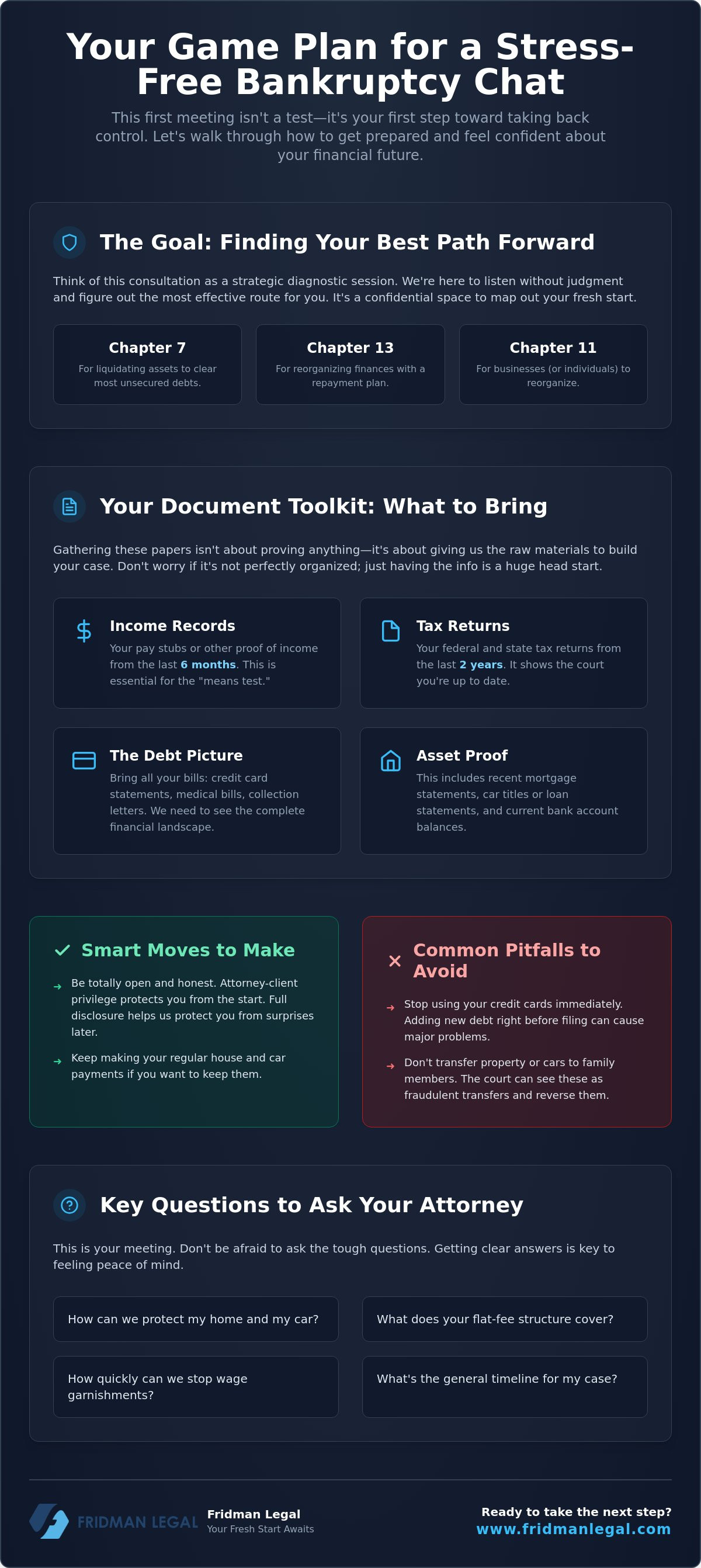
Walking into a law office with a stack of financial documents can feel like you're preparing for a high-stakes audit, but the reality is much more supportive. When you're preparing for your first meeting with a bankruptcy attorney, you aren't gathering evidence of a failure; you're collecting the building blocks of your recovery. Having these items ready allows us to move past the "what ifs" and start making concrete decisions about your assets. To get the most out of our time together, please prioritize the following records:
- Income Records: You'll need pay stubs or proof of income for the last six months. This is a non-negotiable requirement for the means test.
- Tax Returns: Provide your federal and state filings from the last two years. The court needs to see that you're current with the IRS before your case can proceed.
- The Debt Picture: Bring every credit card statement, medical bill, and collection notice you've received. Don't worry about the order; we just need to see the total landscape.
- Asset Proof: This includes your most recent mortgage statement, car titles, and current bank account balances.
Why These Documents Are Essential
Each piece of paper serves a specific legal function. Your pay stubs are used to calculate your "current monthly income," which determines if you fall under the 2026 median income limits. For example, we'll check your figures against the current $73,272 threshold for a single person in New York or $87,173 in New Jersey. These numbers are the gatekeepers for Chapter 7 eligibility. These documents also help us prepare for the mandatory meeting of creditors, where a trustee will verify your financial status under oath. By identifying priority debts like taxes versus non-priority debts like credit cards early on, we can build a strategy that maximizes your discharge. If you want to see how we categorize these for our clients, feel free to look over our bankruptcy services for more detail.
What if My Records Are a Mess?
It's common to feel paralyzed if your records are disorganized or missing. Don't let a "messy" filing cabinet stop you from seeking the help you need. Most modern financial institutions allow you to download digital statements in minutes, and we can often help you access these during our session. If you've lost track of exactly who you owe, we can pull a comprehensive credit report to ensure no creditor is left off your petition. Our goal is to lighten your load, not add more administrative stress to your plate. We're here to help you sort through the noise so you can focus on the path forward.
Questions Your Attorney Will Ask (And What You Should Ask Them)
When you're preparing for your first meeting with a bankruptcy attorney, you should expect the conversation to feel like a deep dive into your recent financial history. We'll ask about any large purchases you've made in the last 90 days or "preferential payments" you might have made to family members or friends. If you recently paid back a personal loan to a cousin instead of a credit card company, the court needs to know. We also need to discuss your long-term goals with total clarity. Do you want to fight to keep your family home in Northbrook, or are you ready to walk away from a property that is deep underwater? Understanding your priorities allows us to select the right legal strategy from the start.
Be prepared to discuss any pending lawsuits, active wage garnishments, or bank levies immediately. The attorney’s questions are designed to "stress-test" your case before it hits the court, ensuring we don't encounter any surprises once the petition is live. This proactive scrutiny is a vital part of the bankruptcy process, as it helps us identify potential hurdles before they become actual problems.
For example, if you are currently involved in personal injury litigation, coordinating with the Law Offices of Michael D. Payne allows your bankruptcy attorney to accurately value any potential settlements, which is a critical step in protecting your financial interests during the filing process.
Questions You Should Have Ready
While preparing for your first meeting with a bankruptcy attorney, having a list of your own questions is just as important as answering ours. You should feel empowered to ask for the "why" behind every recommendation. Consider asking these specific questions during our session:
- "Based on my income and expenses, which chapter do I qualify for, and why is that the best fit?"
- "Which of my assets am I at risk of losing under current Illinois exemptions?"
- "What is the total cost of this process, including the 2026 court filing fees and your legal fees?"
Comparing Chapter 7 vs. Chapter 13
The choice between chapters often comes down to your assets and your income. Chapter 7 is frequently called a "liquidation" bankruptcy, though many people are able to keep all their property through exemptions. It’s often a faster path for renters or those with limited equity. Chapter 13, on the other hand, is a "repayment" plan that lasts three to five years. This is a powerful tool for homeowners who have fallen behind on mortgage payments but want to save their house from foreclosure. For a deeper look at how this applies locally, you can read our guide on Chapter 7 Bankruptcy in Northbrook, IL. Choosing the right path depends entirely on whether you're looking for a quick exit or a structured recovery plan.
Common Pitfalls to Avoid Before Your Consultation
Deciding to seek legal help is a pivotal moment, but the period between that decision and your actual appointment is where many people accidentally complicate their cases. While you're preparing for your first meeting with a bankruptcy attorney, you must be extremely mindful of how you handle your remaining cash and credit. One of the most critical steps is to stop using your credit cards immediately. Continuing to charge expenses when you know you're heading toward insolvency can be interpreted as bad faith or even fraud. Creditors often monitor recent activity, and they may challenge the discharge of any debt incurred right before a filing. If you plan to keep your car or your home, keep making those payments. These are secured assets, and staying current is the most reliable way to ensure you don't lose them during the proceedings.
Another common error is trying to "protect" assets by transferring titles or cash to friends and family. It might seem like a good idea to put your second car in a cousin's name, but the court views this as an attempt to hide assets from creditors. These types of moves are easily tracked through public records and bank statements. If a transfer is flagged, it can lead to a total denial of your discharge and potentially more severe legal consequences. It's much safer to keep everything in your name and let us use the legal exemptions available to shield your property from the start.
The Danger of "Preferential Transfers"
It's a natural instinct to want to pay back a personal loan to a family member before the court gets involved. However, paying your brother back while your other creditors go unpaid is considered a "preferential transfer." Under the law, the bankruptcy trustee can actually sue your family member to "claw back" that money so it can be split among all your creditors. This often results in the exact opposite of what you intended, putting your loved ones in the middle of a legal battle. This is why you must disclose every transfer of property or cash from the last two years during our session. We need to know about these payments so we can manage the fallout before the trustee ever sees the file.
Protecting Your Retirement Accounts
We often see clients who have spent years' worth of retirement savings trying to pay off medical bills or credit cards. This is usually a strategic error because most tax-qualified retirement plans, like a 401k or an IRA, are 100% exempt under Illinois law. In fact, for cases through 2028, IRAs are shielded up to $1,711,975. By draining a protected asset to pay a debt that would have been wiped out anyway, you're sacrificing your future for a temporary fix. During our meeting, we'll look at your 401k strategy and ensure you aren't giving up more than the law requires. If you want to ensure your strategy is sound from the start, reach out to us for a professional evaluation.
Why Choose Fridman Legal for Your Northbrook Bankruptcy
Choosing the right representation is the most significant decision you'll make in this process. While you're preparing for your first meeting with a bankruptcy attorney, you need to know that your case is in the hands of someone who truly understands the local legal landscape. Attorney O. Allan Fridman brings twenty years of experience specifically within the Illinois court system to every case. We've seen how the Cook County bankruptcy courts operate and how trustees in our region interpret specific exemptions. This local insight isn't just a bonus; it's a strategic advantage that can mean the difference between a smooth discharge and unnecessary delays.
We believe that financial recovery should start with absolute clarity. That's why we offer flat-fee structures for Chapter 7 filings. You won't have to worry about hidden costs or surprise hourly bills as your case progresses. Our Northbrook office provides a professional and discreet environment where we can focus entirely on your financial reset. We aren't just here to file paperwork. Our goal is to provide a comprehensive strategy that covers your financial life after the bankruptcy is finalized, helping you rebuild your credit and maintain long-term stability. We focus on the big picture so you can stop worrying about the past and start planning for what comes next.
Our Personalized Approach
When you work with us, you aren't handed off to a paralegal or a junior assistant. You work directly with an attorney who is deeply familiar with the nuances of Illinois bankruptcy laws. We understand how to navigate the specific requirements of the local courts, ensuring your petition is filed with the precision required to avoid challenges. We take the time to analyze every detail of your financial history to ensure we're using every available legal tool to protect your assets. You can learn more about our specialized approach by visiting our Fridman Legal Bankruptcy Services page.
Ready to Take the First Step?
If you're ready to move forward, preparing for your first meeting with a bankruptcy attorney starts with a simple conversation. You can schedule your consultation today through our website. In the first 24 hours after our meeting, you'll have a clear understanding of your eligibility and a specific list of the next steps we'll take on your behalf. We'll handle the creditors and the complex filings while you focus on your future. To get started, please Contact Us to arrange a time that works for you.
Secure Your Path to Financial Recovery
The weight of debt often feels insurmountable, but proper preparation transforms that burden into a manageable legal process. By organizing your financial records and avoiding the common pitfalls we've discussed, you've already completed the most difficult part of the journey. You now have the clarity needed to move from a state of uncertainty to a strategic, actionable plan for your future.
Preparing for your first meeting with a bankruptcy attorney is about finding a partner who understands the specific nuances of the Illinois court system. With over 20 years of specialized experience and convenient office locations in Northbrook and the Chicago area, Fridman Legal provides the professional stability you need. We believe in total transparency, which is why we offer flat-fee pricing for Chapter 7 and Chapter 13 filings. This approach ensures you can focus on your recovery without the stress of unpredictable legal expenses.
You don't have to navigate this transition alone. Schedule your confidential debt relief consultation with Fridman Legal today. Taking this step is the most effective way to reclaim your financial independence and start your fresh chapter with total confidence.
Frequently Asked Questions
How much does a bankruptcy consultation cost at Fridman Legal?
You should reach out to our office directly to confirm current arrangements for your initial session. We prioritize professional transparency in all our client relationships; we'll ensure you have a clear understanding of all financial expectations before your meeting begins. This allows you to focus entirely on the strategic aspects of your case rather than administrative costs.
Will I have to go to court immediately after my first meeting?
No, your first meeting is a confidential strategy session, not a court appearance. This initial consultation serves as a diagnostic phase where we analyze your raw financial data and determine the most effective legal path forward. It typically takes several weeks to prepare and file the actual petition; only then will the court schedule your meeting of creditors.
What if I am missing some of the documents on the checklist?
You should still keep your appointment even if you don't have every document ready. While preparing for your first meeting with a bankruptcy attorney is more efficient with a full checklist, we can begin the evaluation with the records you have available. We can often help you identify ways to retrieve missing tax returns or bank statements electronically during the meeting.
Can I bring my spouse to the first meeting even if we are filing individually?
Yes, you can certainly bring your spouse to the consultation. Even if you're filing an individual petition, your spouse's income and shared household expenses are essential for the means test calculations. Having them present often provides a more comprehensive view of your financial landscape and ensures that both of you understand the legal strategy we are developing for your household.
How long does the first meeting usually last?
Most initial bankruptcy consultations take approximately 45 to 60 minutes to complete. This duration allows us to conduct a thorough review of your debts, assets, and long-term goals without rushing the analysis. We want to ensure that every question you have is answered and that we've gathered enough information to provide an accurate assessment of your eligibility for debt relief.
Will filing for bankruptcy stop my wage garnishment right away?
The legal protection that stops garnishments begins immediately upon the official filing of your petition. While the consultation itself doesn't stop the garnishment, preparing for your first meeting with a bankruptcy attorney is the essential first step toward triggering the "automatic stay." This court injunction halts most collection actions, including bank levies and foreclosure proceedings, providing you with immediate relief.
Do I need to stop paying my bills before I meet with you?
You should generally keep paying on assets you want to keep, like your car or home. However, you might choose to stop paying unsecured debts like credit cards if you're certain you'll be filing for bankruptcy. We'll discuss your specific payment strategy during our meeting to ensure you aren't wasting resources on debts that will likely be wiped out in the process.
What is the difference between Chapter 7 and Chapter 13 in Illinois?
Chapter 7 focuses on a quick discharge of debt while Chapter 13 involves a structured repayment plan. Chapter 7 is often a faster path for those who meet the 2026 income limits and have limited equity in assets. Chapter 13 is a powerful tool for homeowners who have fallen behind on mortgage payments but wish to save their property from foreclosure through a three to five year plan.

Article by
O. Allan Fridman
O. Allan Fridman has been practicing law since 2001. His practice is unique in that he does not view himself as a litigation attorney or transactional attorney. Rather, he views each area of law as a tool to pursue the best results for his clients. By practicing in both areas of law, he is able to take a 360-degree view of law. This enables the firm to catch potential drawbacks that are readily identifiable.
By practicing in litigation and transactional law and taking a holistic approach in dealing with our clients, he doesn’t put clients in box — rather, as we are all individuals, so too are the legal services we may require.
Whether it is bankruptcy or litigation or transactional, each client brings challenges and does not fit in any one box. Often times, bankruptcy clients end up not filing bankruptcy because we can achieve a better result through litigation or through an out-of-court resolution with the lender, or through a real estate sale. On the other end of the spectrum, a litigation client with multiple issues and lawsuit may fare better in a bankruptcy.
Since 2001, Allan has practiced in states and federal court, and he is a member of the trial bar of the Northern District of Illinois and admitted in the Northern District of Indiana.
We are a debt relief agency. We help people file for bankruptcy relief under the Bankruptcy Code
The materials on this site are for informational purposes only and do not constitute legal advice. Viewing this site or contacting us does not create an attorney–client relationship, and you should not act or refrain from acting based on any information here without seeking professional legal counsel.