

What if the biggest threat to your new home isn't a leaky roof, but a paperwork error from eighty years ago? In a real estate market as legally dense as Chicago, many buyers find themselves asking: what is title insurance and why do I need it in Cook County? It’s completely normal to feel frustrated by the mounting costs at the closing table, especially when you’re already navigating the $0.25 per $500 Cook County transfer tax and various recording fees that seem to add up without much explanation.
We understand that the legal jargon can feel like a barrier to your security. This guide is designed to cut through that noise and show you exactly how title insurance protects your home investment from hidden legal threats like forged deeds or undisclosed heirs. We’ll explain the critical differences between lender and owner policies, break down the 2026 rate schedules, and ensure you know how to handle a title defect if one ever surfaces. By the end, you’ll feel confident that your ownership is ironclad and your financial future is safe.
Key Takeaways
- Understand that title insurance acts as a shield for the past, protecting you from clerical errors or missing heirs that occurred long before you took ownership.
- Learn exactly what is title insurance and why do I need it in Cook County to navigate the region's notoriously complex tax cycles and hidden municipal liens.
- Distinguish between the mandatory lender’s policy that covers the bank’s interests and the owner’s policy that's essential for protecting your own home equity.
- See how an attorney's review of the "Title Commitment" identifies dangerous exceptions that title companies often refuse to cover by default.
- Discover how a specialized legal perspective helps you treat your property transfer as a secure wealth-building move rather than just more paperwork.
The Basics: What Title Insurance Actually Does for You
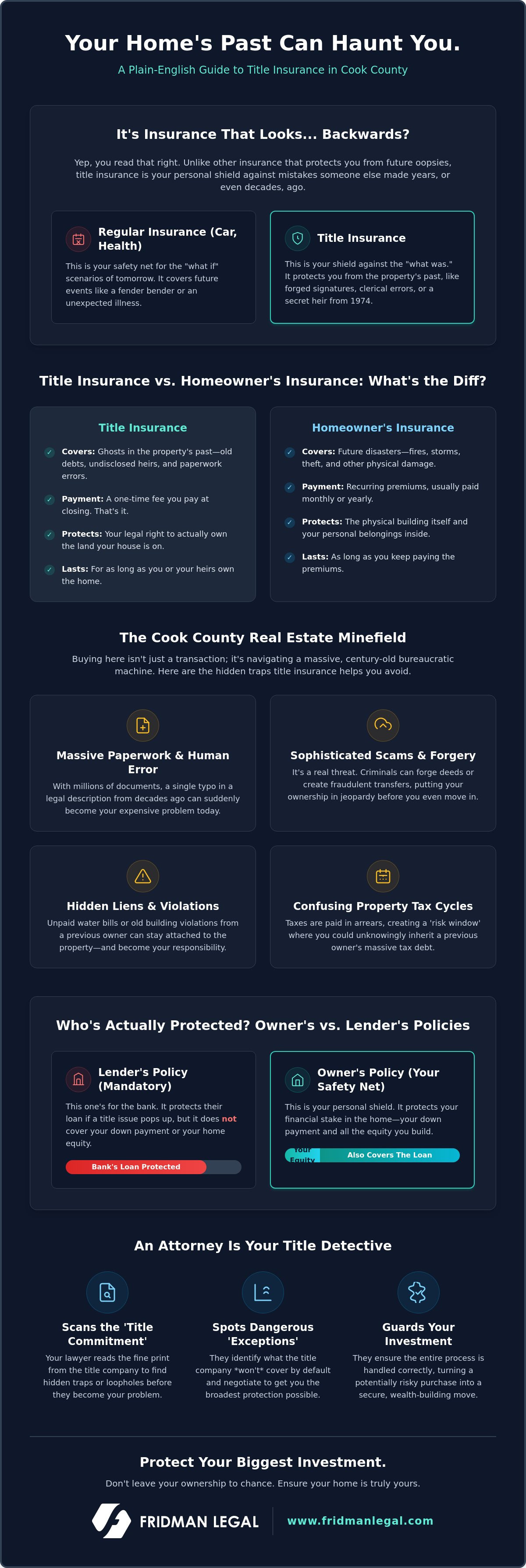
Most people think of insurance as a safety net for future disasters. You buy car insurance because you might get into a fender bender tomorrow. You buy health insurance because you might get sick next year. Title insurance doesn't work that way. It's a backward-looking protector for your property rights. Instead of looking at what might go wrong, it looks at what already did. It's designed to give you peace of mind regarding the history of the land you're about to call your own.
When you're navigating a purchase in the Chicago area, you'll likely ask: what is title insurance and why do I need it in Cook County? It's a fair question. Unlike other policies, this one ensures that when you buy a house, you actually own it, free and clear. It’s a shield against the ghosts of the property’s past. Essentially, title insurance is a one-time fee that protects you against claims of ownership or financial encumbrances that happened before you ever signed a contract.
For a broader perspective on the industry, reading up on What is Title Insurance? can help you understand the legal foundations. In short, it’s the only thing standing between you and a legal nightmare involving a forged signature from 1974 or an undisclosed heir who suddenly wants their share of your backyard. In a county with millions of residents and a history stretching back centuries, the chances of a clerical error or a missing signature are higher than you might think. Without this protection, you'd be personally responsible for any legal fees required to defend your ownership.
Title Insurance vs. Homeowners Insurance
It’s easy to confuse these two, but they serve completely different masters. Homeowners insurance is all about the "what if." It covers fire, theft, and storms. It’s your protection against the unpredictable future. Title insurance, on the other hand, covers the "what was." It deals with hidden heirs, old debts, and deeds that were poorly drafted by someone who hasn't lived in Illinois for forty years.
The cost structure is also a major differentiator. You don’t have to deal with monthly premiums here. You pay for title insurance once at the closing, and the policy stays active for as long as you or your heirs own the home. It’s a permanent investment in your peace of mind. While homeowners insurance protects the physical structure of the building, title insurance protects your legal right to stand on the land it’s built on. It ensures that no one can show up ten years from now with a lien you didn't know existed.
Why Cook County Property Transfers Carry Unique Risks
Cook County isn't just another real estate market; it’s a massive, complex bureaucratic machine. When you're buying a home here, you aren't just dealing with a seller and a bank. You're stepping into a history of records that spans over a century. If you’ve been asking what is title insurance and why do I need it in Cook County, the answer often lies in the sheer volume of data handled by the Cook County Clerk’s office. With millions of documents flowing through the system, the "human factor" becomes a significant liability. A single digit typed incorrectly in a legal description decades ago can suddenly become your problem today.
Beyond clerical mishaps, high-value markets like Northbrook and the North Shore have seen an uptick in sophisticated scams and forgeries. These aren't just plot points for a crime drama. They're real threats where forged deeds or fraudulent transfers can cloud your ownership before you even move in. According to the Illinois Real Estate Lawyers Association, the complexity of these transactions is exactly why having professional oversight is non-negotiable in Illinois. Title insurance acts as your primary defense against these hidden municipal threats, ranging from unpaid water bills to building violations that stay attached to the land rather than the previous owner.
The Nightmare of Unpaid Property Taxes
Cook County property tax cycles are notoriously confusing because they're paid in arrears. This creates a window of risk where a simple title search might miss a pending tax complication. The "Scavenger Sale" system adds another layer of danger; if a previous owner fell behind, a third party could have a claim against the property that isn't immediately obvious. It's vital to have an attorney verify the tax redemption status to ensure you aren't inheriting a massive debt. We often address these specific tax nuances during our residential real estate closings to keep our clients' investments secure.
Clerical Errors and the "Human Factor"
Small mistakes often lead to the biggest headaches. A misspelled name on a deed from twenty years ago can halt your ability to sell or refinance your home today. In many Chicago neighborhoods, property boundaries were established under old legal descriptions that might conflict with modern surveys. You might also run into "missing heirs" from three generations back who suddenly emerge to claim a piece of your property. Title insurance is designed to handle the legal costs of fighting these claims so you don't have to pay out of pocket for someone else's mistake.
Owner’s vs. Lender’s Policies: Protecting Your Equity
When you sit down at the closing table, you'll likely notice two different entries for title insurance on your settlement statement. It’s a common point of confusion for many buyers. If you’re asking what is title insurance and why do I need it in Cook County, the answer depends on whose money is being protected. The Lender’s Policy is a non-negotiable requirement for anyone taking out a mortgage. Your bank wants to be absolutely certain that their lien on the property is valid and that no one else can claim a superior interest that might jeopardize their loan. However, it's vital to remember that the lender’s policy only covers the amount of the mortgage, and its protection ends the moment you pay off the loan.
The Owner’s Policy is technically optional, but in the context of a Cook County real estate transaction, it's practically essential for your financial security. While the lender’s version looks out for the bank, the owner’s version looks out for you, covering the full purchase price of the home. In Illinois, it is customary for the seller to pay for the owner’s policy, which is a significant benefit for buyers. You should always verify this in your initial contract to ensure the cost is allocated correctly. As noted by the National Association of Insurance Commissioners, having this policy means the insurance company is responsible for the legal costs of defending your title if a claim arises, which can save you tens of thousands in attorney fees.
Why Your Lender’s Policy Isn’t Enough
Relying solely on a lender’s policy leaves your personal investment exposed. Imagine a scenario where a contractor performed a major roof replacement in 2022 but was never paid by the previous owner. If that contractor filed a mechanic's lien that wasn't discovered during the initial search, the lender’s policy would protect the bank’s interest, but it wouldn't do a thing for your down payment. Without an owner’s policy, your equity is essentially on the line. The bank only cares about getting their loan balance back; they have no obligation to protect the $100,000 or $200,000 you’ve invested in the property.
The "One-Time" Premium Benefit
The cost structure of title insurance is actually quite buyer friendly. Unlike homeowners insurance, which requires monthly or annual premiums, title insurance involves a one-time fee paid at closing. If you purchase both the lender’s and owner’s policies together, you typically benefit from a "simultaneous issue" rate. This discount makes the combined cost much lower than buying them separately. This single payment provides a lifetime of protection. The policy remains in effect for as long as you or your heirs own the property, ensuring that your property rights are shielded against past errors forever.
How an Attorney Navigates the Title Process for You
Many people view title insurance as a product they simply purchase at the end of a transaction, similar to buying a warranty for a new appliance. In reality, it's the culmination of a rigorous legal investigation managed by your attorney. When you ask what is title insurance and why do I need it in Cook County, you’re really asking for a guarantee that your property rights are enforceable. Your attorney doesn’t just order the policy; they actively shape it to ensure you aren't inheriting someone else’s legal mess. It's a strategic process that starts weeks before you ever see a closing statement.
Long before you reach the closing table, your attorney receives a document called the "Title Commitment." This is essentially the title company’s promise to insure the property, but it always comes with a list of "exceptions." These are the specific issues the company won't cover unless they're resolved. Your attorney’s job is to scrutinize these exceptions and force the seller to clear them. This might involve proving that an old mortgage was paid off or ensuring that a contractor’s lien from five years ago is formally released. Clearing the title is often the most labor-intensive part of the closing process, requiring constant communication with the title company and the seller’s counsel.
It’s also important to distinguish between the insurance policy itself and your attorney’s "Opinion of Title." While the policy provides financial protection, the attorney’s opinion is the professional analysis that tells you whether the title is "marketable." This means you can sell it later without a headache. If you want to ensure your investment is truly protected, you can learn more about how we handle these complex details through our Fridman Legal real estate services. We don't just look at the paperwork; we look at the long term security of your ownership.
Reviewing the Title Commitment
During the review, we look for easements that could ruin your future plans. For instance, an undisclosed utility easement might prevent you from building a deck on your Northbrook property. We also look for "clouds on title," such as unresolved probate cases where a distant relative might still have a claim, or old mortgages that were never properly discharged in the public record. Identifying these issues early prevents the deal from falling apart at the last minute and ensures you don't face a surprise lawsuit years down the road.
What Happens at the Closing Table?
At the closing, we perform a final check to ensure all "Schedule B" requirements are met. This is the part of the commitment that lists exactly what needs to happen for the policy to become active. The title company also acts as the "escrow agent" here, holding the funds and documents until every legal box is checked. This ensures that the seller doesn't get their money until you have a clear, insurable title in your name. To get started with a team that prioritizes your security, feel free to reach out to us for help with your residential real estate closing.
Why Professional Representation Matters in Cook County
Buying or selling a home is often the most significant financial event in a person's life. It’s important to see these transactions for what they really are: a massive legal transfer of wealth. In an environment as complex as Chicago's, you shouldn't treat the closing process as mere administrative paperwork. By now, you've likely realized that asking what is title insurance and why do I need it in Cook County isn't just a box to check on a form. It is about building a wall around your financial future. When you have professional representation, you aren't just paying for a signature; you're investing in a shield against the clerical errors and hidden debts we've discussed throughout this guide.
One of the unique advantages we bring to the table is a deep understanding of the intersection between property law and financial distress. Our experience with debt relief allows us to spot red flags that other firms might overlook. We know exactly how judgments, liens, and credit complications can weave themselves into a property’s title history. This specialized perspective ensures that when we tell you a title is clear, we’ve looked at it through a lens of total financial security. It's a level of scrutiny that protects you from the "DIY" trap, where a small oversight today can lead to a devastating loss of equity five or ten years down the road.
A Holistic Approach to Property Ownership
Your home is a pillar of your long-term stability. A clean title isn't just necessary for your current peace of mind; it’s the foundation for your family’s legacy. When you begin thinking about estate planning, you'll find that the strength of your property rights determines how easily you can pass your wealth to the next generation. We take a holistic view of your transaction, ensuring that your real estate goals align with your broader financial and legacy plans. We don't just want you to close on a house; we want you to own an asset that is legally beyond reproach.
Ready to Close on Your New Home?
If you're preparing for a residential or commercial closing in Northbrook or Chicago, don't leave the details to chance. The cost of a title mistake far outweighs the cost of having an experienced attorney in your corner. Fridman Legal offers the personalized, results-driven approach you need for a stress-free experience. O. Allan Fridman is ready to provide the expert guidance required to navigate the unique risks of the local market. Contact Fridman Legal today to secure your real estate transaction and move forward with absolute confidence in your ownership.
Protecting Your Property Rights for the Future
You’ve put in the work to find the perfect home. Now you need to ensure that your ownership is ironclad. This guide has highlighted that title insurance isn't just an extra fee; it’s a necessary shield against the specific legal complexities of the Chicago market. By understanding what is title insurance and why do I need it in Cook County, you’re taking the most important step toward protecting your home equity from hidden liens or clerical errors that could surface years down the road.
At Fridman Legal, we bring nearly 20 years of local legal experience to the table. Our expertise in both real estate law and debt resolution allows us to identify risks that others might overlook, providing you with personalized and results-driven representation. We don't just process paperwork; we represent your interests with the precision your investment deserves. Schedule your real estate closing consultation with Fridman Legal to get the professional guidance you need for a smooth, secure transaction. Your future in your new home starts with a clean title and the right legal team behind you.
Frequently Asked Questions
Is title insurance required by law in Illinois?
Technically, Illinois state law doesn't mandate that you purchase title insurance. However, if you're financing your home through a bank or private lender, they will absolutely require a lender's policy to protect their investment. While an owner's policy is technically optional for cash buyers, skipping it leaves your entire investment exposed to any past legal errors or hidden claims.
How much does title insurance cost in Cook County?
The cost of title insurance is based on the purchase price of the property and is a one-time fee paid at closing. For a home valued at $200,000 or less, the owner's policy rate is approximately $2,150 as of May 2026. For properties over $500,000, the rate typically increases by about $50 for every $50,000 increment in value.
Can I choose my own title insurance company?
Yes, you have the legal right to choose your title provider under federal law. In Cook County, it's customary for the seller’s attorney to select the company because the seller usually pays the premium for the owner’s policy. If you have a specific preference, it's best to negotiate this point during the initial contract phase before the title work begins.
What is a "cloud on title" and how do I fix it?
A cloud on title is any unresolved claim, lien, or encumbrance that makes the ownership of the property unclear. Fixing a cloud usually involves legal steps like tracking down a former owner for a quitclaim deed or paying off an old, forgotten mortgage. Your attorney’s role is to identify these clouds in the title commitment and ensure the seller clears them before you take possession.
Does title insurance cover property boundary disputes?
Standard title insurance policies often exclude boundary issues unless you add a specific survey endorsement to your coverage. If a neighbor later claims your garage is on their land, a basic policy might not protect you. We recommend obtaining a fresh survey and the appropriate endorsements to ensure your policy covers the actual physical footprint of your property.
What happens if a lien is discovered after I buy the house?
If a hidden lien appears after you’ve closed on the home, your owner's policy is designed to handle it. The insurance company will either pay to settle the debt or cover the legal costs to defend your title in court. This protection is exactly what is title insurance and why do I need it in Cook County; it ensures that someone else’s old debt doesn't become your financial nightmare.
Is the title search different from title insurance?
Yes, the title search is the investigation process, while title insurance is the actual protection. A search looks for known issues in public records, but it isn't foolproof. Title insurance exists to protect you against the things the search can't find, like forged signatures, secret heirs, or clerical mistakes in the Cook County Clerk's records that only surface years later.
Why do I need an attorney if the title company is already involved?
The title company is a neutral insurer, but they don't provide you with legal advice or advocacy. An attorney represents your specific interests by reviewing the title commitment for dangerous exceptions that the insurance company refuses to cover. We work to ensure you aren't just getting an insurance policy, but that you're actually receiving a clean, marketable title to your new home.

Article by
O. Allan Fridman
O. Allan Fridman has been practicing law since 2001. His practice is unique in that he does not view himself as a litigation attorney or transactional attorney. Rather, he views each area of law as a tool to pursue the best results for his clients. By practicing in both areas of law, he is able to take a 360-degree view of law. This enables the firm to catch potential drawbacks that are readily identifiable.
By practicing in litigation and transactional law and taking a holistic approach in dealing with our clients, he doesn’t put clients in box — rather, as we are all individuals, so too are the legal services we may require.
Whether it is bankruptcy or litigation or transactional, each client brings challenges and does not fit in any one box. Often times, bankruptcy clients end up not filing bankruptcy because we can achieve a better result through litigation or through an out-of-court resolution with the lender, or through a real estate sale. On the other end of the spectrum, a litigation client with multiple issues and lawsuit may fare better in a bankruptcy.
Since 2001, Allan has practiced in states and federal court, and he is a member of the trial bar of the Northern District of Illinois and admitted in the Northern District of Indiana.
We are a debt relief agency. We help people file for bankruptcy relief under the Bankruptcy Code
The materials on this site are for informational purposes only and do not constitute legal advice. Viewing this site or contacting us does not create an attorney–client relationship, and you should not act or refrain from acting based on any information here without seeking professional legal counsel.