

The most successful business transitions often start with a legal filing that others mistake for an end. While debt can feel like an insurmountable weight, choosing to reorganize is a sophisticated move to protect your legacy. Finding a dedicated business bankruptcy attorney chicago Suburbs allows you to stop the cycle of creditor harassment and start making decisions based on strategy rather than fear. You've spent years building your enterprise; you shouldn't have to risk your personal assets because of a complex commercial downturn.
It is completely normal to feel overwhelmed by the dense terminology of the bankruptcy code or the fear of losing your family home. We agree that you deserve a process that prioritizes your dignity while providing a clear exit or a fresh start. This guide offers a straightforward look at how to handle business debt and what to look for in a legal partner. We'll preview the significant 2026 Illinois exemption increases, such as the $50,000 homestead protection, and explain how modern tools like Subchapter V can help you keep control of your business while settling what you owe.
Key Takeaways
- You'll learn the practical differences between liquidating through Chapter 7 and reorganizing under Chapter 11 to find the best path for your company's future.
- Working with a dedicated business bankruptcy attorney chicago Suburbs ensures your representative knows the specific procedures of local courts in Skokie and Waukegan.
- We debunk common myths about personal liability, showing you how to use Illinois laws to shield your home and personal belongings during a business transition.
- Discover why choosing a flat-fee structure over hourly billing provides the financial predictability you need when managing existing debt.
- See how integrating real estate legal expertise can help you navigate commercial property sales or residential closings as part of your broader debt relief strategy.
Facing Business Debt in the Chicago Suburbs
Running a business in the North Shore or the surrounding suburbs comes with a unique set of pressures. You've built a reputation in your community, and the idea of that enterprise faltering can feel like a personal failure. Many owners try to "power through" by pouring their own savings into a sinking ship. This usually isn't the best strategy for your family's future. A business bankruptcy attorney chicago Suburbs can help you realize that debt isn't a moral failing; it's a logistical hurdle. In the 2026 economic environment, sitting in silence only makes your problems grow while your options shrink.
The U.S. Bankruptcy Code was created to provide a structured way out of these exact situations. It's a set of tools designed to help you reorganize or liquidate in a way that protects what matters most. Taking control of the situation early is the only way to ensure you're the one making the decisions, rather than reacting to a creditor's lawsuit. By the time a collection agency is knocking, you've already lost half your leverage. Strategic filing allows you to dictate the terms of your transition.
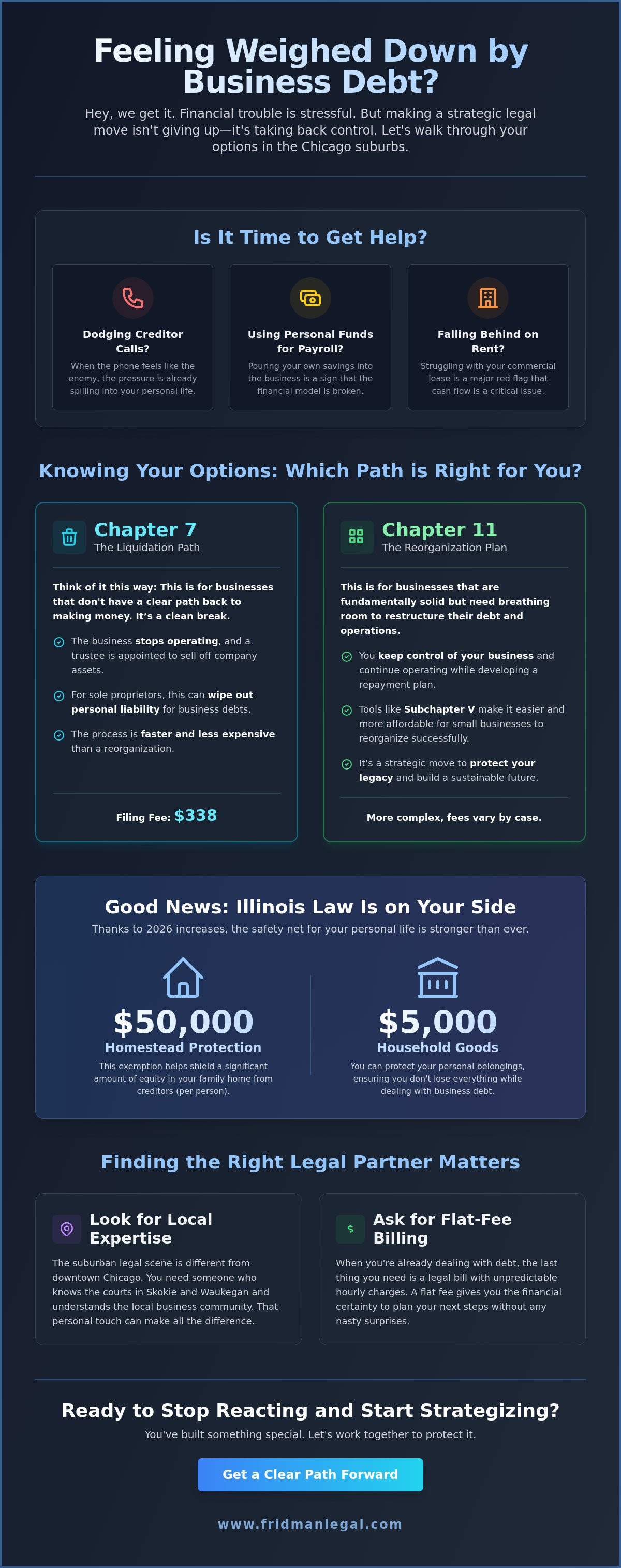
The 2026 economic landscape has shifted the ground for many Illinois businesses. With the state's homestead exemption now at $50,000 per person and new household goods exemptions reaching $5,000, the safety net for your personal life is stronger than it used to be. You can now protect more of your home and belongings while dealing with business liabilities. This isn't about giving up; it's about using the available legal framework to ensure you don't lose everything you've worked for outside of the office.
The Weight of Business Debt
You know the feeling when you start dodging phone calls or dreading the mail. When creditor pressure spills over into your personal life, the stress becomes unmanageable. Common signs like using high-interest personal loans to cover payroll or falling behind on commercial lease payments mean it's time for a professional review. Waiting until a foreclosure or a lawsuit is filed limits your ability to use the law to your advantage. Taking action now stops the harassment and gives you room to breathe.
Why Local Context Matters
The business community in places like Northbrook or Glenview operates on relationships. Suburban dynamics differ greatly from the high-volume "big law" environment of downtown Chicago. You need a partner who understands local vendors and the specific nuances of the suburban legal circuit. Finding a business bankruptcy attorney chicago Suburbs ensures your case is handled by someone who knows the local landscape and can provide the discreet, personalized support a suburban business owner needs. This local expertise is vital when negotiating with community banks or managing the sale of suburban commercial assets.
Knowing Your Options: Chapter 7 vs. Chapter 11
Choosing the right legal path is less about following a script and more about protecting your specific goals. For most business owners in the Chicago suburbs, the decision boils down to whether you want to salvage the entity or close it down for good. You'll generally choose between Chapter 7 and Chapter 11, though sole proprietors might also look into Chapter 13. While you can find the general Bankruptcy Basics on the court's website, a skilled business bankruptcy attorney chicago Suburbs will explain that these aren't just forms; they're strategic maneuvers. They tailor these options to your local reality, ensuring you don't lose more than necessary.
The financial commitment for these filings is standardized at the federal level, but the impact on your operation varies wildly. Consider these baseline costs for 2026:
- Chapter 7 Filing Fee: $338
- Chapter 13 Filing Fee: $313
- Chapter 13 "No-Look" Attorney Fee: $5,500 maximum for routine cases in the Northern District of Illinois
Chapter 7: The Liquidation Path
Chapter 7 is the liquidation path. It's designed for businesses that no longer have a viable path to profitability. For a corporation or LLC, this means the business stops operating and a trustee sells off assets to pay creditors. If you're a sole proprietor, this process can wipe out your personal liability for business debts. You can read more about the specific local requirements in our guide to Chapter 7 bankruptcy Illinois. It is often the fastest way to get a clean break and move on to your next venture.
Chapter 11: The Reorganization Path
Chapter 11 is about reorganization. It's for companies that have a solid core but are currently drowning in debt or unfavorable contracts. In 2026, the "Subchapter V" option is a massive advantage for small businesses because it's faster and less expensive than traditional filings. You'll need to file a reorganization plan within 90 days, but it allows you to keep control of your business. If your debt is under the current limit, which usually sits between $3 million and $7.5 million, this is likely your best bet. Our detailed look at Chapter 11 bankruptcy filing explains how to use this to keep your doors open. If you need help calculating which path saves you more in the long run, consulting with a specialist can clarify your next steps.
Finding a business bankruptcy attorney chicago Suburbs who understands these nuances is vital. A sole proprietor might find that Chapter 13 offers a better way to manage personal and business debt simultaneously, especially with the increased Illinois homestead exemptions protecting up to $50,000 of your home equity. Each path has a different timeline and cost structure, and the right choice depends entirely on your vision for the future.
Common Myths About Business Bankruptcy in Illinois
Many business owners in our local community hesitate to seek relief because they're haunted by outdated myths. They worry that a filing is a permanent stain on their reputation or that the bank will seize their family home the moment they sign the paperwork. This simply isn't the reality of modern insolvency law. A seasoned business bankruptcy attorney chicago Suburbs will tell you that bankruptcy is often the most responsible pivot you can make. It's a legal mechanism designed to stop the bleeding and protect what's actually yours. It's about taking control before the situation takes control of you.
One of the most immediate benefits of filing is the "automatic stay." This legal shield goes into effect the second your case is filed. It stops all collection actions, phone calls, and even pending lawsuits in their tracks. You don't have to navigate an intimidating downtown courtroom to get this protection; most suburban cases are handled through local divisions or even remotely. Understanding Chapter 11 bankruptcy basics helps you see that this process is about strategy, not surrender. It gives you the breathing room to negotiate without the constant threat of a bank levy.
Will I Lose Everything?
The fear of losing personal assets is the biggest hurdle for most entrepreneurs. However, Illinois law provides robust protections. As of January 1, 2026, the homestead exemption has increased to $50,000 per person. This means if you and your spouse own a home together, you can protect up to $100,000 in equity. Additionally, the 2026 household goods exemption covers up to $5,000 in furniture and electronics. Unless you've signed a specific personal guarantee that pierces the corporate veil, your business liabilities shouldn't automatically drain your personal bank accounts. Protecting your future starts with knowing which assets are legally off-limits to creditors.
The Reputation Factor
There's a lingering stigma that bankruptcy means you're "done" in the business world. In reality, the Chicago business landscape is full of successful leaders who've navigated a reorganization. Most filings never make the local news; they're simply administrative steps in a professional transition. A successful reorganization shows future partners that you have the integrity to handle debt properly rather than just disappearing. It's about a fresh start, not a final exit. You can protect your tools of the trade up to $2,250 and your vehicle up to $3,600, ensuring you have the means to begin your next chapter with dignity. If you're ready to see how these protections apply to your specific situation, reaching out for a professional review is the first step toward clarity.
Choosing a Business Bankruptcy Attorney in the Chicago Suburbs
Selecting a legal partner is the most critical decision you'll make once you decide to address your business debt. You don't want to be another folder in a high-volume "case mill" where your interests are secondary to the firm's turnover. A dedicated business bankruptcy attorney chicago Suburbs offers a level of focus that downtown firms often struggle to maintain. You need someone who has spent nearly two decades navigating the Cook County and Lake County court systems. This deep experience means they understand the specific expectations of local trustees and judges in the Northern District of Illinois, which can significantly influence the speed of your case.
Predictability is essential when your finances are already under strain. Many firms bill by the hour, which can lead to invoice shock at the end of the month. Instead, look for a fee structure that provides clarity from the start. For example, in the Northern District of Illinois, routine Chapter 13 cases often use a "no-look" flat fee, which is capped at $5,500 as of June 2025. While Chapter 7 and Chapter 11 fees vary depending on complexity, a transparent partner will discuss these costs upfront. This allows you to plan your reorganization or liquidation without the fear of hidden legal expenses.
The Suburban Advantage
Working with a firm in Northbrook rather than a skyscraper downtown saves more than just time. Proximity to local courthouses in Skokie or Waukegan matters because your attorney is a regular presence in those rooms. They aren't just visiting; they're part of the local legal community and understand the nuances of suburban business dynamics. You'll avoid the parking headaches and long commutes of the Loop, allowing for more frequent, face-to-face strategy sessions. This accessibility ensures that if a crisis arises with a creditor, your counsel is just a short drive away.
Questions to Ask During Your Consultation
Don't be afraid to interview your potential representative to ensure they're the right fit for your goals. You should feel comfortable with how they explain the law; if they hide behind dense legalese, they might not be the best choice for a collaborative reorganization. Consider asking these specific questions:
- How many businesses in my specific industry have you successfully guided through a Chapter 11 or Subchapter V filing?
- What are the specific risks to my commercial real estate or equipment during this process in the Chicago area?
- Will I be working directly with you, or will my case be managed by support staff?
You deserve a partner who prioritizes results over volume and speaks to you with professional clarity. If you're ready to discuss a tailored strategy for your business, schedule a professional case review to explore your options with a local expert.
How Fridman Legal Supports Your Business Transition
O. Allan Fridman understands that your business is more than just a balance sheet. It's a collection of years of hard work, local relationships, and future dreams. When you work with a business bankruptcy attorney chicago Suburbs, you shouldn't feel like you're being processed through a legal machine. At Fridman Legal, we prioritize a personalized, results-driven approach that focuses on your specific goals, whether that's a dignified exit or a strategic reorganization. We don't just hand you a stack of paperwork; we walk you through the logic behind every decision.
One thing that sets our practice apart is how we bridge the gap between debt relief and other vital legal needs. For instance, if your reorganization or liquidation involves selling property, having a real estate lawyer for closing who is already familiar with your bankruptcy case is a massive advantage. Most firms will send you elsewhere for real estate transactions, but we keep that expertise in-house. This ensures that the sale of your commercial warehouse or your personal residence happens smoothly and stays in compliance with the court's requirements.
More Than Just Bankruptcy
Financial distress rarely travels alone. It often brings along complex construction disputes or civil litigation that can complicate your path to relief. Having a business bankruptcy attorney chicago Suburbs who also understands construction law prevents these side-issues from draining your remaining assets. We don't just file your petition and walk away. Our team is equipped to handle civil litigation representation, ensuring that a single vendor dispute doesn't derail your entire filing. If you're not ready for a full filing, we also offer strategic debt negotiation and settlement. You can explore our detailed guide on debt settlement lawyer services to see if an out-of-court solution fits your current situation.
Your Path Forward Starts Here
The goal isn't just to resolve your current debt; it's to set the stage for your next chapter. We believe in clear, conversational communication that takes the intimidation out of the Cook County legal system. When you're ready to move forward, we invite you to schedule a discreet consultation at our Northbrook office. Bring your recent financial statements and any pending legal notices, and we'll sit down to map out a clear path together. Let’s discuss your business options today and find the stability you've been looking for.
Secure Your Business Legacy with a Strategic Plan
Addressing business debt isn't about admitting defeat; it's about choosing the most sophisticated route to financial recovery. We've explored how the 2026 Illinois exemptions can shield your home and personal property while you reorganize or liquidate. Whether you're looking at the streamlined efficiency of Subchapter V or a clean break through Chapter 7, the right strategy depends on having a partner who understands the local suburban landscape. Choosing an experienced business bankruptcy attorney chicago Suburbs ensures you aren't just filing forms, but building a bridge to your next venture. Beyond immediate debt relief, securing your legacy often involves long-term planning and general counsel; to see how specialized firms approach these needs, check out Massingill Attorneys & Counselors at Law.
O. Allan Fridman brings nearly 20 years of local Illinois experience to every case, offering the predictability of flat-fee options and the convenience of a Northbrook office. You don't have to manage creditor pressure or complex legal filings on your own. It's time to replace the stress of debt with a clear, actionable path forward that protects your remaining assets and your dignity. Talk to a Human: Schedule Your Business Debt Consultation and take the first step toward a stable financial future.
Frequently Asked Questions
Do I have to live in Chicago to file business bankruptcy in the Northern District?
You don't need to live within the Chicago city limits to file your case in the Northern District of Illinois. This federal court district covers a broad area including the North Shore and western suburbs. If your business is headquartered or holds its primary assets in a town like Northbrook, Glenview, or Skokie, your case will be handled within this specific jurisdiction.
Can a business bankruptcy attorney in the Chicago suburbs help me stop a foreclosure?
Yes, a business bankruptcy attorney chicago Suburbs can stop a foreclosure immediately by triggering the automatic stay. This federal injunction halts all collection activities, including property auctions and bank levies, the moment your petition is filed. It provides the necessary breathing room to either reorganize your debt through Chapter 11 or negotiate a settlement with your lender from a position of strength.
What is the difference between a business liquidation and a reorganization?
A liquidation, typically filed under Chapter 7, involves closing the business and selling off its assets to pay creditors. Reorganization, such as Chapter 11 or Chapter 13, allows the entity to continue operating while restructuring its debt into a manageable payment plan. Liquidation is a final exit strategy; reorganization is a tool for businesses that remain viable but need a fresh financial start.
How much does it cost to hire a bankruptcy attorney for a small business?
While attorney fees vary based on the complexity of your case, the federal court system sets standard filing fees of $338 for Chapter 7 and $313 for Chapter 13. In the Northern District of Illinois, routine consumer cases often use a "no-look" flat fee capped at $5,500 for legal representation. We'll discuss your specific situation during a consultation to ensure you have a predictable understanding of all costs involved.
Will my personal credit be affected if my corporation files for bankruptcy?
Your personal credit score is generally not affected by a corporate bankruptcy filing as long as you didn't personally guarantee the business debt. However, if you're a sole proprietor or have signed personal guarantees for commercial loans, your personal credit will likely be impacted. It's vital to review all your loan documents to see where your personal and business liabilities overlap before you file.
How long does the business bankruptcy process typically take in Illinois?
A Chapter 7 liquidation usually wraps up within four to six months. Reorganizations take significantly longer; a Chapter 13 plan typically lasts three to five years, while a Chapter 11 timeline depends on the speed of creditor negotiations. If you're eligible for Subchapter V, you're required to file your reorganization plan within 90 days, which can significantly accelerate the path to a court-approved resolution.
Can I still run my business while a Chapter 11 case is active?
Yes, you can continue managing your daily operations as a "debtor in possession" throughout the Chapter 11 process. You'll retain control over your staff and customer relationships, though the court must approve major decisions like selling significant assets or taking on new debt. This allows you to maintain the value of your enterprise while working toward a fair and equitable settlement with your creditors.
What happens to my employees if my business files for Chapter 7?
In a Chapter 7 filing, the business typically stops operating immediately, and employees are usually let go. However, the law provides a priority claim for unpaid wages and benefits earned shortly before the filing. A business bankruptcy attorney chicago Suburbs can help you navigate these payments to ensure your staff is treated fairly and according to federal priority rules during the liquidation of your assets.

Article by
O. Allan Fridman
O. Allan Fridman has been practicing law since 2001. His practice is unique in that he does not view himself as a litigation attorney or transactional attorney. Rather, he views each area of law as a tool to pursue the best results for his clients. By practicing in both areas of law, he is able to take a 360-degree view of law. This enables the firm to catch potential drawbacks that are readily identifiable.
By practicing in litigation and transactional law and taking a holistic approach in dealing with our clients, he doesn’t put clients in box — rather, as we are all individuals, so too are the legal services we may require.
Whether it is bankruptcy or litigation or transactional, each client brings challenges and does not fit in any one box. Often times, bankruptcy clients end up not filing bankruptcy because we can achieve a better result through litigation or through an out-of-court resolution with the lender, or through a real estate sale. On the other end of the spectrum, a litigation client with multiple issues and lawsuit may fare better in a bankruptcy.
Since 2001, Allan has practiced in states and federal court, and he is a member of the trial bar of the Northern District of Illinois and admitted in the Northern District of Indiana.
We are a debt relief agency. We help people file for bankruptcy relief under the Bankruptcy Code
The materials on this site are for informational purposes only and do not constitute legal advice. Viewing this site or contacting us does not create an attorney–client relationship, and you should not act or refrain from acting based on any information here without seeking professional legal counsel.