

The 2026 fiscal environment has rendered standard debt relief protocols insufficient for those seeking to maintain significant residential equity. When you're facing persistent creditor harassment or the potential loss of a property in Northbrook, the technical precision of your legal representation becomes the primary factor in your solvency. Engaging a strategic bankruptcy lawyer chicago provides the necessary barrier between your private assets and the volatility of aggressive debt collection.
You likely recognize that the complexities of current Illinois law require a more disciplined approach than the boilerplate filings of previous decades. This guide demonstrates how a precise, strategic application of state statutes protects your estate and secures a stable financial future. We'll examine the specific mechanisms used to ensure the immediate cessation of wage garnishment and provide a clear, evidence-based path toward solvency by navigating the rigorous requirements of the Illinois Means Test.
Key Takeaways
- Understand the specific procedural requirements of the U.S. Bankruptcy Court for the Northern District of Illinois to ensure a structured path toward financial restructuring.
- Determine your eligibility for Chapter 7 liquidation or Chapter 13 reorganization by navigating the Illinois Means Test and local median income thresholds.
- Engaging a strategic bankruptcy lawyer chicago provides a litigator’s perspective, moving beyond simple documentation to comprehensive financial advocacy in complex proceedings.
- Learn how to leverage the Illinois Homestead Exemption and other legal protections to safeguard your primary residence and professional tools during the debt relief process.
- Discover a holistic recovery model that integrates estate planning and real estate law to secure long-term stability and asset preservation.
Navigating the Chicago Bankruptcy Landscape: Context and Court Systems
Bankruptcy has evolved into a sophisticated instrument for financial restructuring, departing from its historical perception as a terminal failure. In the current economic climate, it functions as a strategic legal mechanism that allows individuals and corporate entities to recalibrate their obligations. This process is governed by the U.S. Bankruptcy Code, which provides a structured framework for debt relief while balancing the rights of creditors. For those seeking a bankruptcy lawyer chicago, understanding how these federal statutes apply to the local suburban landscape is a prerequisite for a successful filing.
Understanding the Northern District of Illinois Court
The U.S. Bankruptcy Court for the Northern District of Illinois manages one of the highest caseloads in the country. Cases originating in Northbrook or surrounding Cook County suburbs are channeled through the Eastern Division. This jurisdictional placement is critical. It dictates which panel of trustees will oversee the case and which local rules will apply to the proceedings. The bankruptcy trustee in Cook County acts as a fiduciary, tasked with examining the debtor's schedules and ensuring the integrity of the bankruptcy estate. Their scrutiny is rigorous; they verify assets and investigate potential transfers that occurred prior to the filing date.
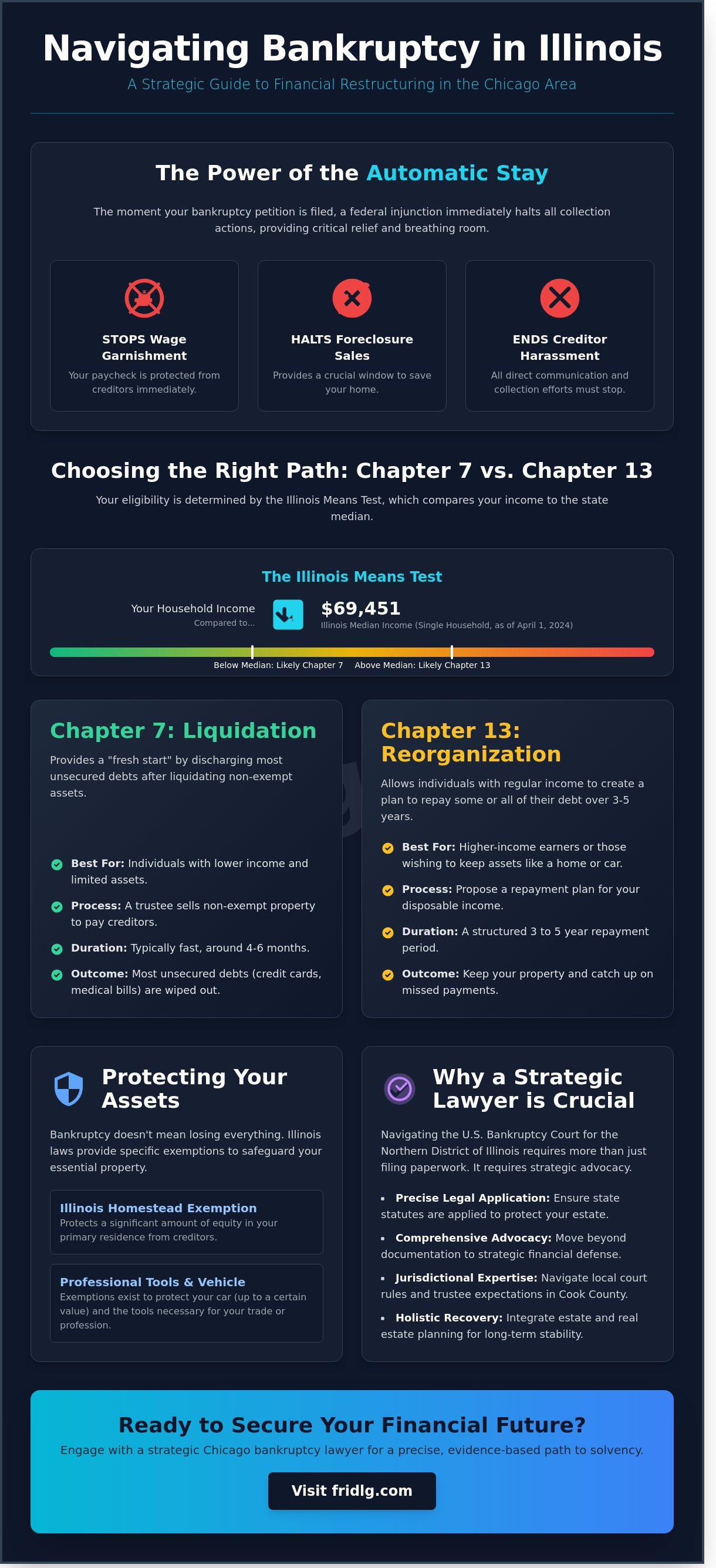
The 'Automatic Stay' is a federal injunction stopping all collection actions.
This injunction takes effect the moment a petition is electronically filed. It creates an immediate legal barrier that halts wage garnishments, foreclosure sales, and persistent creditor communications. For residents in the Chicago suburbs, this stay provides the necessary breathing room to finalize a reorganization plan without the pressure of imminent asset seizure. It's a powerful tool, yet its effectiveness depends on the precision of the initial filing documents.
Local Debt Trends in Northbrook and the Chicago Suburbs
Financial instability in Northbrook often arises from specific regional catalysts rather than general economic malaise. Recent data suggests that medical debt remains a primary trigger, often compounded by sudden shifts in the high-end real estate market. Business downturns in the professional services sector also contribute to a rise in Chapter 11 and Chapter 13 filings. When a household faces a suburban foreclosure, the window for intervention is narrow. Strategic timing is paramount; a bankruptcy lawyer chicago must synchronize the federal filing with state court foreclosure timelines to protect the primary residence effectively.
Local Northbrook ordinances and Cook County property tax cycles frequently intersect with federal bankruptcy proceedings. These intersections can complicate the treatment of municipal liens or specialized local assessments. Precise jurisdictional knowledge ensures that suburban clients don't overlook these nuances. A failure to account for local tax nuances can lead to post-petition complications that threaten the long-term viability of the discharge. Professional representation focuses on these granular details to ensure the restructuring is both comprehensive and durable.
Choosing the Right Chapter: Chapter 7 vs. Chapter 13 in Illinois
Selecting the appropriate legal framework for debt relief requires a calculated analysis of a person's financial architecture. A qualified bankruptcy lawyer chicago will initially evaluate whether a client qualifies for Chapter 7 liquidation or must pursue a Chapter 13 reorganization. This determination hinges largely on the Illinois Means Test. As of April 1, 2024, the median income for a single-person household in Illinois is $69,451. Individuals exceeding these specific thresholds must undergo a secondary calculation of disposable income to determine their eligibility for liquidation.
For high-income earners in Northbrook, the strategic implications are significant. When income levels preclude Chapter 7, Chapter 13 provides a structured mechanism to manage debt while retaining non-exempt assets. The U.S. Bankruptcy Court offers resources for Understanding Bankruptcy in Illinois, which outlines the procedural rigor required in these federal filings. Engaging a bankruptcy lawyer chicago allows for a meticulous review of these figures, ensuring that the chosen path aligns with both state mandates and long-term fiscal goals.
Chapter 7: The 'Fresh Start' via Liquidation
Chapter 7 facilitates the discharge of unsecured liabilities, such as credit card balances and medical expenses, typically within 90 to 120 days. While the process involves the potential sale of non-exempt assets, Illinois state law provides specific exemptions to protect equity in primary residences and personal vehicles. Professional guidance is essential to ensure a Chapter 7 Bankruptcy in Northbrook, IL is executed without the unnecessary loss of critical property. It's the fastest route to debt elimination, though it remains on credit reports for 10 years.
Chapter 13: Reorganization for Homeowners and Earners
Chapter 13 involves a court-mandated repayment plan spanning 36 to 60 months. This path is particularly effective for Northbrook homeowners facing foreclosure, as it allows for the curing of mortgage arrears over the life of the plan. Engaging experienced Chapter 13 Lawyers Near Me ensures that the proposed budget meets the stringent requirements of the Chicago courts while protecting the filer's interests. This chapter typically remains on a credit report for seven years from the filing date.
The choice between these chapters isn't merely a matter of preference; it's a decision dictated by income, asset value, and the nature of the debt. Sophisticated financial recovery starts with a precise evaluation of these variables. You may request a confidential consultation to begin the process of restructuring your obligations.
The Role of a Strategic Chicago Bankruptcy Attorney
Effective insolvency representation transcends simple clerical tasks. A proficient bankruptcy lawyer chicago functions as a strategic architect, constructing a financial framework that anticipates potential creditor challenges before they manifest. While automated software can populate schedules, it cannot provide the litigator's perspective required for complex adversary proceedings or the nuances found in the Illinois State Bar Association's Guide to Bankruptcy. This distinction between administrative filing and strategic advocacy becomes critical during the 341 Meeting of Creditors. At this mandatory hearing, your attorney serves as your primary defense; they ensure the Trustee's inquiries remain within legal bounds and verify that your testimony adheres strictly to the established record.
Evaluating Legal Expertise: Beyond the Bar Association
Selecting counsel requires an assessment of their litigation history. Nearly twenty years of experience in Illinois civil litigation provides a depth of knowledge that high-volume bankruptcy mills cannot replicate. These large-scale operations often prioritize turnover over individual strategy, which frequently leads to overlooked exemptions or poorly structured repayment plans. A boutique firm offers the discretion necessary for sensitive financial restructuring. It ensures your case receives the focused attention of a senior partner rather than being delegated to an entry-level associate. Red flags include firms that refuse to provide direct access to the lead attorney or those that guarantee specific outcomes without a thorough audit of your liabilities. Precision in the initial filing phase prevents the 25% increase in dismissal rates often seen in pro se or poorly represented cases.
Fee Structures and Professional Integrity
Professional legal fees reflect the complexity of the federal court system. A bankruptcy lawyer chicago typically utilizes either flat-fee arrangements for standard Chapter 7 filings or hourly billing for sophisticated Chapter 11 or 13 reorganizations. Transparency in these costs is a hallmark of professional integrity. While low-cost alternatives may seem attractive initially, they often result in case dismissals due to technical errors; such failures can bar you from refiling for 180 days under 11 U.S.C. § 109(g). Legal fees are often the most cost-effective part of debt discharge. Investing in high-value counsel protects your remaining assets and ensures the permanent elimination of qualifying debts. Reliable firms provide a written engagement letter that clearly defines the scope of representation, from the initial credit counseling briefing to the final discharge order.
Asset Protection: Keeping Your Home and Business in Illinois
Asset preservation requires a calculated understanding of the Illinois Compiled Statutes. Under 735 ILCS 5/12-901, individuals in the Chicago area can exempt up to $15,000 of equity in their primary residence. This figure doubles to $30,000 for married couples filing jointly. A skilled bankruptcy lawyer chicago ensures these exemptions are applied with surgical precision to prevent the liquidation of a family home. Beyond real estate, the law protects personal property through 735 ILCS 5/12-1001, which includes a $4,000 "wildcard" exemption for any personal asset and $1,500 for professional tools of the trade.
Effective legal strategy balances federal bankruptcy code with local property laws. This intersection is particularly relevant when high-value assets are involved. Creditors often target non-exempt equity, making it necessary to conduct a rigorous valuation before any filing occurs. We focus on protecting the following categories:
- Primary residences and secondary Chicago-based properties.
- Professional equipment and specialized machinery.
- Qualified retirement accounts and pension plans.
- Vehicle equity up to the statutory limit of $2,400.
Real Estate Considerations for Northbrook Homeowners
Strategic equity calculations dictate whether a property remains safe or becomes subject to a trustee's sale. If your Northbrook property's market value significantly exceeds the mortgage balance and applicable exemptions, a bankruptcy-related sale might be required. In these instances, the involvement of a real estate closing attorney is vital to manage the transaction within the court's oversight. Filing a Chapter 13 petition can stop repossession or foreclosure proceedings immediately. This legal maneuver creates an automatic stay, providing a structured environment to cure arrears over a three to five year period.
Business Continuity and Civil Litigation
For entrepreneurs, the Small Business Reorganization Act of 2019 introduced Subchapter V, which streamlined the Chapter 11 process. This allows Chicago-based businesses to restructure debt while maintaining operational control. Commercial creditors often employ aggressive tactics, including the placement of liens. Managing construction disputes or mechanic's liens requires a dual expertise in civil litigation and federal bankruptcy code. If you are facing the loss of commercial vehicles or equipment, consult a Repossession Lawyer in Northbrook, IL to secure your operational assets.
Secure your corporate and personal legacy through strategic legal counsel at Fridlg.
The Fridman Legal Approach: Precise Debt Relief Solutions
Securing a bankruptcy lawyer chicago involves more than just filing paperwork; it requires a strategic partnership focused on long-term solvency. At Fridman Legal, every case receives the direct, personalized attention of O. Allan Fridman. This boutique approach ensures that clients aren't passed off to junior associates or paralegals. Instead, each financial restructuring plan is crafted with the precision that complex debt relief demands. Maintaining professional dignity is a cornerstone of the practice, providing a discreet environment where clients can address financial distress without judgment.
The firm's methodology follows a disciplined, four-stage process designed to minimize risk and maximize the scope of the discharge:
- Initial Strategic Consultation: A thorough analysis of assets, liabilities, and exemptions to determine the optimal filing chapter.
- Documentation and Forensic Review: Collecting 6 months of income records and 2 years of tax returns to ensure petition accuracy.
- Petition Filing and Stay Implementation: Immediate activation of the automatic stay to halt creditor harassment and foreclosure actions.
- Discharge and Post-Bankruptcy Planning: Finalizing the court's decree and transitioning toward financial rebuilding.
A Multi-Disciplinary Legal Strategy
Financial recovery doesn't exist in a vacuum. Effective debt relief often intersects with real estate holdings and complex litigation. O. Allan Fridman utilizes his extensive background in real estate law to protect equity and manage property-related disputes that frequently arise during Chapter 7 or Chapter 13 proceedings. This integrated expertise prevents the common pitfalls where a bankruptcy filing inadvertently jeopardizes a primary residence or commercial asset.
True stability requires looking beyond the final discharge. Once the court closes the case, the focus shifts to preserving the newly regained wealth. This often involves a seamless transition to Estate Planning in Northbrook. By establishing trusts or updated wills immediately following a bankruptcy, clients ensure their fresh start is protected against future volatility, creating a permanent foundation for their family's financial legacy.
Your Path to Stability in Chicago and Suburbs
Taking the first step toward debt relief requires a results-driven legal review. The Northbrook office serves as a centralized hub for clients across the Chicago suburbs seeking a sophisticated bankruptcy lawyer chicago. Preparation is the key to a successful outcome. Prospective clients should arrive at their consultation with a complete list of creditors and any pending court summons to allow for an immediate assessment of their legal standing.
Efficiency and clarity define the Fridman Legal experience. There's no need for aggressive marketing tactics when the legal strategy is sound. The firm focuses on delivering the quiet confidence that comes from knowing your financial future is being handled by a practitioner who values precision over volume. Contact Fridman Legal for a strategic bankruptcy evaluation to begin the process of reclaiming your financial independence through a structured, professional approach.
Strategize Your Path to Financial Stability
Navigating the complexities of the Illinois court system requires more than just filing paperwork. It demands a calculated strategy to preserve your home and business interests through 2026 and beyond. Choosing between Chapter 7 and Chapter 13 is a pivotal decision that dictates your long-term fiscal health. Our firm brings nearly 20 years of Illinois legal experience to every case; we bridge the gap between complex legal abstractions and practical financial recovery. It's essential to partner with a bankruptcy lawyer chicago who understands the intricate intersection of debt relief and real estate law to ensure your assets remain protected. Precise, result-driven representation ensures that every procedural detail aligns with your specific objectives. You don't have to face the pressures of debt without a sophisticated advocate by your side. Take the first step toward a restructured future with confidence. Secure your financial future with a strategic consultation at Fridman Legal. You've the power to redefine your financial trajectory and reclaim your peace of mind today.
Frequently Asked Questions
How much does it cost to hire a bankruptcy lawyer in Chicago?
Legal fees for a Chapter 7 case typically range from $1,250 to $1,800 based on a 2023 industry survey of the Illinois legal market. You'll also encounter mandatory court filing fees, which the U.S. Bankruptcy Court for the Northern District of Illinois sets at $338 for Chapter 7 and $313 for Chapter 13. These costs exclude credit counseling fees which usually total less than $50.
Can I keep my house in Northbrook if I file for Chapter 7?
You can retain your primary residence if the home's equity doesn't exceed the Illinois homestead exemption limit. Under 735 ILCS 5/12-901, an individual can protect up to $15,000 in equity, while married couples filing jointly can exempt $30,000. If your mortgage payments are current and your equity stays within these statutory boundaries, the trustee won't sell the property to satisfy creditors.
What is the Illinois Means Test and how does it affect my filing?
The Illinois Means Test is a formulaic calculation that determines if your income is low enough to qualify for Chapter 7 liquidation. If your household's average gross income for the six months prior to filing is below the Illinois median, which was $72,551 for a single person as of May 2023, you pass automatically. Applicants over the median must complete a complex analysis of allowed expenses to prove they lack the disposable income to fund a repayment plan.
How long does the bankruptcy process take in the Northern District of Illinois?
A standard Chapter 7 case generally concludes with a discharge order within 120 days of the initial filing. Chapter 13 cases are significantly longer, requiring the completion of a court-approved repayment plan that lasts between 36 and 60 months. Your 341 Meeting of Creditors usually occurs within 40 days of your petition date, serving as the primary milestone in the administrative timeline.
Will filing for bankruptcy stop my wage garnishment immediately?
The filing of a bankruptcy petition triggers an automatic stay under 11 U.S.C. § 362, which legally prohibits creditors from continuing wage garnishments. Your bankruptcy lawyer chicago will provide the formal notice to your employer and the state court to ensure the payroll deductions cease within 24 to 48 hours. This federal injunction provides immediate liquidity to your household while the court processes your debt discharge.
How often can you file bankruptcy in Northbrook and Chicago, IL?
You're eligible for a Chapter 7 discharge once every 8 years from the date of your previous filing. If you're seeking a Chapter 13 discharge after a successful Chapter 7, the waiting period is 4 years. These timelines are strictly enforced by the Bankruptcy Abuse Prevention and Consumer Protection Act of 2005 to ensure the system is used for genuine financial rehabilitation rather than serial debt avoidance.
Do I have to go to court for a bankruptcy case in Chicago?
Most petitioners never see a judge and instead attend a 341 Meeting of Creditors conducted by a trustee. Since 2020, the Northern District of Illinois has transitioned these meetings to a remote format using Zoom or telephonic platforms. You'll only appear in a physical courtroom at the Dirksen Federal Building if a creditor files a formal objection or if your case involves complex litigation regarding asset exemptions.
What is the difference between Chapter 7 and Chapter 13 for business owners?
Chapter 7 involves the total liquidation of business assets and the cessation of operations for corporations or LLCs. Conversely, Chapter 13 allows sole proprietors to restructure their debts and maintain their business activities through a structured payment schedule. A bankruptcy lawyer chicago assists owners in navigating the debt limits for Chapter 13, which are currently capped at $2,750,000 for total liabilities under federal law.
Article by
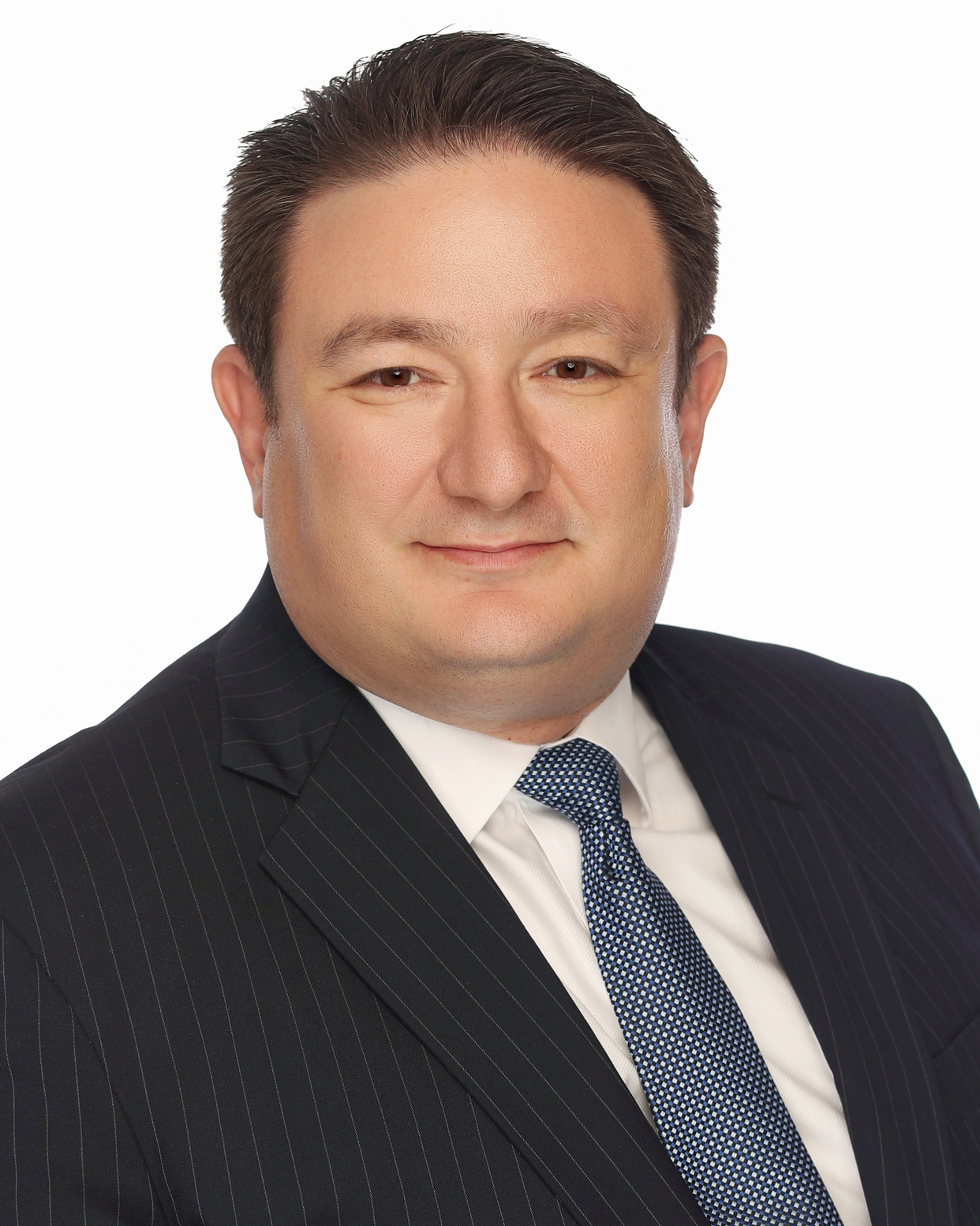
O. Allan Fridman
O. Allan Fridman has been practicing law since 2001. His practice is unique in that he does not view himself as a litigation attorney or transactional attorney. Rather, he views each area of law as a tool to pursue the best results for his clients. By practicing in both areas of law, he is able to take a 360-degree view of law. This enables the firm to catch potential drawbacks that are readily identifiable.
By practicing in litigation and transactional law and taking a holistic approach in dealing with our clients, he doesn’t put clients in box — rather, as we are all individuals, so too are the legal services we may require.
Whether it is bankruptcy or litigation or transactional, each client brings challenges and does not fit in any one box. Often times, bankruptcy clients end up not filing bankruptcy because we can achieve a better result through litigation or through an out-of-court resolution with the lender, or through a real estate sale. On the other end of the spectrum, a litigation client with multiple issues and lawsuit may fare better in a bankruptcy.
Since 2001, Allan has practiced in states and federal court, and he is a member of the trial bar of the Northern District of Illinois and admitted in the Northern District of Indiana.
We are a debt relief agency. We help people file for bankruptcy relief under the Bankruptcy Code
The materials on this site are for informational purposes only and do not constitute legal advice. Viewing this site or contacting us does not create an attorney–client relationship, and you should not act or refrain from acting based on any information here without seeking professional legal counsel.


